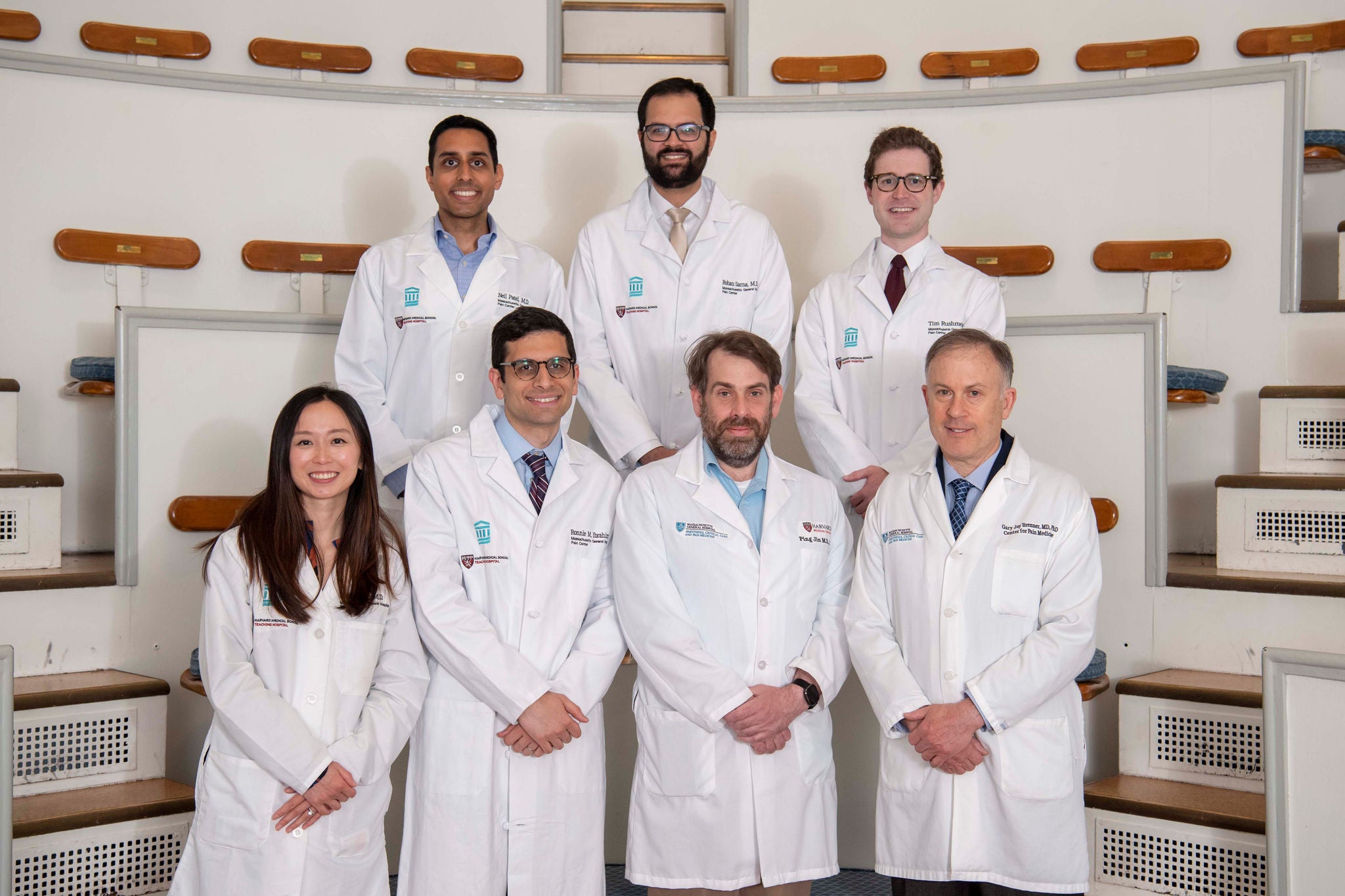
Mass General Brigham Integrated Pain Medicine Fellowship
Email: Lricci@mgh.harvard.edu
Email: Missa1@bwh.harvard.edu
Welcome from the Program Director
Thank you for your interest in the Mass General Brigham Integrated Pain Medicine Fellowship.
We are proud to offer a uniquely collaborative training experience that brings together the strengths of Brigham and Women’s Hospital and Massachusetts General Hospital within a unified, system-wide program. Our goal is to provide a comprehensive and immersive fellowship that prepares physicians not only for independent practice, but for leadership in the evolving field of pain medicine.
Fellows train across a diverse range of clinical environments, including tertiary academic centers, community-based practices, the VA Boston Healthcare System, and Boston Children’s Hospital, gaining experience in the full spectrum of acute, chronic, and cancer-related pain across the lifespan. This breadth of exposure is paired with robust procedural training, longitudinal patient management, and meaningful interdisciplinary collaboration.
A defining feature of our program is its intentional integration of interventional pain medicine with psychiatry, addiction medicine, rehabilitation, neurology, and palliative care. This structure reflects the realities of modern pain practice and supports the development of thoughtful, evidence-based, and patient-centered clinicians who are comfortable managing complex and high-risk patient populations.
Equally central to our mission is a deep commitment to mentorship and professional development. Fellows work closely with a diverse and dedicated faculty in a collegial, supportive environment that emphasizes individualized growth, intellectual curiosity, and well-being. With access to the extensive resources of Mass General Brigham and a Harvard-affiliated academic community, our graduates are exceptionally well positioned to pursue careers in academic medicine, clinical leadership, or innovative models of care.
We invite you to explore our program further and learn more about the curriculum, faculty, and opportunities we offer. We look forward to connecting with you.
Moe Issa, MD
Program Director, Integrated Pain Medicine Fellowship
Mass General Brigham
Department of Anesthesia, Perioperative and Pain Medicine
Program Overview and Distinguishing Features
The Mass General Brigham Integrated Pain Medicine Fellowship is a one-year, ACGME-accredited program that provides comprehensive, interdisciplinary training across the full spectrum of pain medicine. By uniting the clinical and academic strengths of Brigham and Women’s Hospital and Massachusetts General Hospital, the fellowship delivers a cohesive, multisite training experience designed to prepare physicians for independent practice and leadership in the field.
Fellows rotate through a range of high-volume clinical environments, including tertiary academic centers, community-based practices, the VA Boston Healthcare System, and Boston Children’s Hospital. This structure provides exposure to diverse patient populations and supports the development of expertise in the management of acute, chronic, and cancer-related pain across the lifespan.
The program provides robust training in interventional pain medicine, encompassing fluoroscopic- and ultrasound-guided procedures, neuromodulation, and minimally invasive surgical techniques. Experience across both academic and community-based settings allows fellows to develop technical proficiency alongside sound clinical judgment in a variety of practice environments.
Training is grounded in a biopsychosocial, interdisciplinary model, with integrated exposure to anesthesiology, psychiatry, addiction medicine, physical medicine and rehabilitation, neurology, psychology, and palliative care. This approach equips fellows to deliver comprehensive, patient-centered care for complex pain conditions and to effectively address the medical, psychological, and social dimensions of pain.
Fellows gain experience across the full continuum of care, including participation in inpatient pain services and longitudinal outpatient management. These experiences strengthen clinical decision-making, foster continuity of care, and build fluency in systems-based practice within a large academic health system.
The fellowship features a structured, protected didactic curriculum with twice-monthly in-person sessions, supplemented by ongoing educational activities such as journal club, interdisciplinary conferences, case-based quality improvement discussions, and morbidity and mortality conferences. Fellows are supported through dedicated mentorship and have protected time for scholarly activity, with access to the extensive academic resources of Mass General Brigham and a Harvard-affiliated environment.
Graduates of the program emerge with the clinical expertise, procedural skills, and professional foundation needed to excel in academic medicine, clinical practice, and leadership roles within complex health care systems.
Curriculum and Clinical Training
The Mass General Brigham Integrated Pain Medicine Fellowship offers a comprehensive, competency-based curriculum designed to provide fellows with progressive responsibility and broad clinical exposure across the full spectrum of pain medicine. Training is thoughtfully structured across multiple clinical sites and care settings to support the development of clinical judgment, interdisciplinary collaboration, and readiness for independent practice.
A substantial portion of the fellowship is devoted to outpatient training in the Pain Management Centers at Brigham and Women’s Hospital and Massachusetts General Hospital, where fellows gain experience in the longitudinal evaluation and management of patients with acute, subacute, and chronic pain conditions. These rotations emphasize a multidisciplinary, biopsychosocial approach that integrates pharmacologic, behavioral, and rehabilitative care, alongside thoughtful patient assessment and individualized treatment planning.
Inpatient training at both institutions offers complementary experience in the evaluation and coordination of care for patients with complex and high-acuity pain conditions. Fellows refine their skills in consultation, communication, and multidisciplinary care delivery, assuming with increasing responsibility over the course of the year.
Additional rotations broaden exposure to diverse patient populations and care models, including the VA Boston Healthcare System, Boston Children’s Hospital, and palliative care services. These experiences cultivate competency in managing pain across different clinical contexts and patient populations.
The curriculum is supported by a structured, protected didactic program that includes twice-monthly in-person sessions, as well as longitudinal educational experiences such as journal club, interdisciplinary conferences, and case-based quality improvement discussions. Fellows are expected to actively engage in these sessions and participate in scholarly activity, supported by dedicated mentorship and institutional resources.
By completion of the fellowship, graduates are prepared to independently evaluate and manage complex pain conditions, collaborate effectively within interdisciplinary teams, and deliver high-quality, patient-centered care across a wide range of clinical settings.
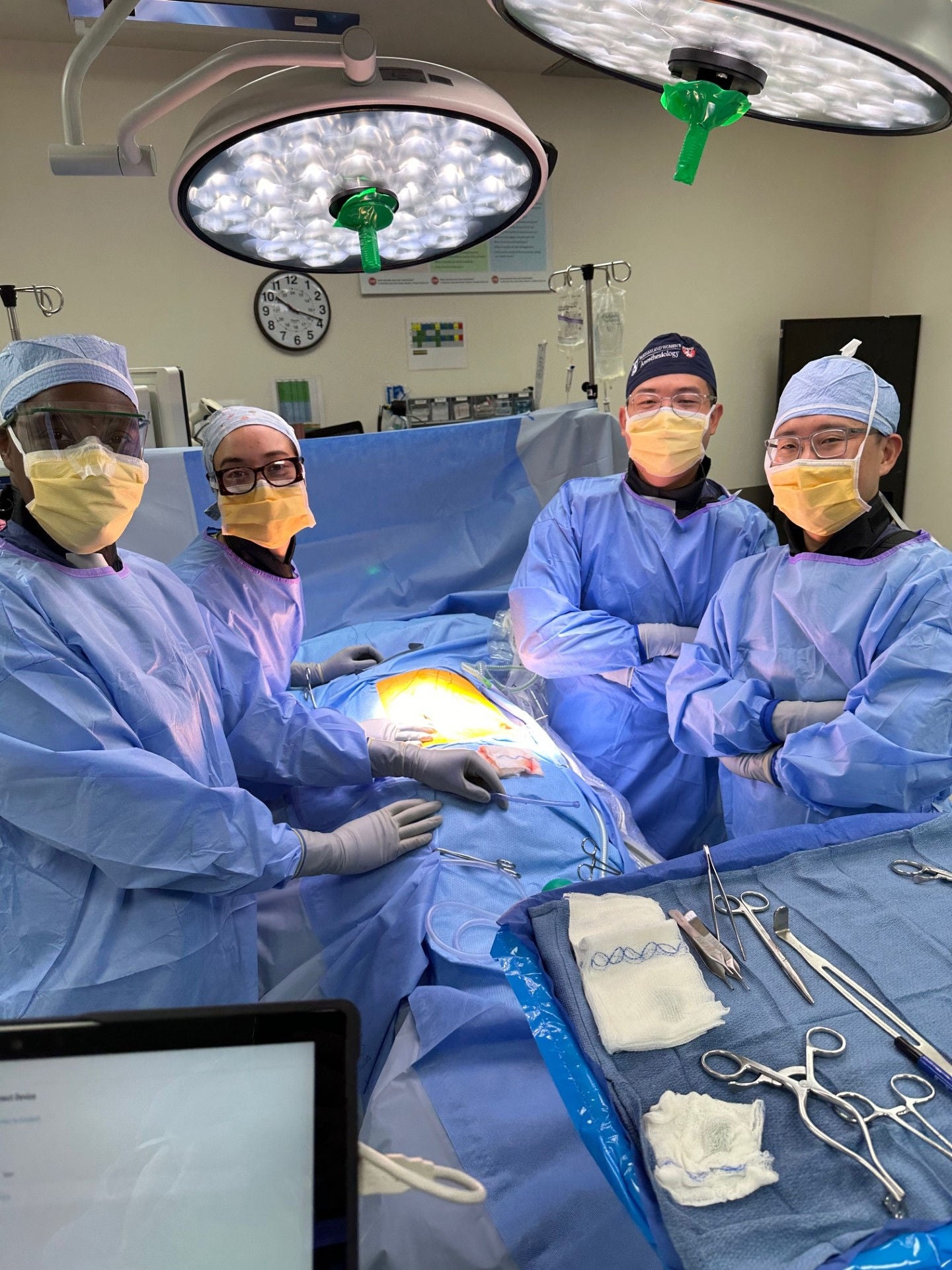
Procedural and Clinical Experience
The Mass General Brigham Integrated Pain Medicine Fellowship offers extensive clinical and procedural experience across a diverse range of practice settings, ensuring that fellows develop both technical proficiency and advanced clinical judgment in the management of complex pain conditions. Training is intentionally structured to provide high-volume exposure while maintaining close faculty supervision and progressive autonomy.
Fellows gain comprehensive experience in interventional pain procedures across both academic and community-based environments, including the Pain Management Centers at Brigham and Women’s Hospital and Massachusetts General Hospital, as well as high-volume community sites. Core procedural training includes fluoroscopic- and ultrasound-guided techniques such as epidural steroid injections, facet interventions, medial branch blocks, peripheral nerve blocks, joint and bursal injections, and neuro-ablative procedures, with an emphasis on precision, safety, and appropriate patient selection.
A distinguishing strength of the program is its depth of exposure to advanced and minimally invasive pain therapies. Fellows are trained in contemporary image-guided and surgical pain interventions, including neuromodulation, intrathecal drug delivery systems, and a broad range of minimally invasive spine procedures such as minimally invasive lumbar decompression (MILD), basivertebral nerve ablation, and vertebral augmentation techniques including kyphoplasty. These experiences are supported by one of the most robust interventional and surgical pain programs in the country, providing fellows with exposure to both established and emerging technologies, as well as the clinical decision-making required to integrate these therapies into comprehensive care.
Clinical experience spans both outpatient and inpatient settings, allowing fellows to develop expertise in the longitudinal management of chronic pain as well as the care of patients with acute, cancer-related, and complex pain syndromes. In the inpatient setting, fellows participate in consultative services and advanced pain management, including interventional and surgical procedures, while collaborating closely with multidisciplinary teams.
The program emphasizes the integration of procedural skills with comprehensive clinical decision-making. Fellows are trained to evaluate the appropriateness of interventions within the context of each patient’s medical condition, functional goals, and psychosocial factors, and to incorporate interventional therapies into broader, multimodal treatment strategies.
Throughout the fellowship, procedural experience is closely supervised by expert faculty, with graduated responsibility based on demonstrated competence. By the end of the training year, fellows are expected to perform a wide range of interventional and minimally invasive procedures safely and effectively, while demonstrating sound clinical judgment and the ability to manage both routine and complex pain presentations across diverse clinical settings.
Research Infrastructure, Scholarship and Academic Opportunities
The Mass General Brigham Integrated Pain Medicine Fellowship offers a rich academic environment supported by the extensive research infrastructure of Mass General Brigham and its Harvard-affiliated institutions. Fellows train within a system that is home to one of the world’s leading anesthesiology research enterprises, where the department is internationally recognized for advancing innovation in patient care, outcomes, and quality of life.
The department’s research mission centers on transforming medicine through innovation, spanning the full continuum of scientific discovery from basic laboratory investigation to clinical translation. Close collaboration between scientists and clinicians drives the development of new therapies, diagnostics, and technologies that directly impact patient care. Fellows benefit from this environment through exposure to cutting-edge research and opportunities to engage with leaders across a wide range of disciplines.
Fellows are encouraged to pursue scholarly work aligned with their interests, with opportunities spanning clinical outcomes research, interventional pain therapies, opioid stewardship, addiction medicine, behavioral pain interventions, health services research, and medical education. Dedicated mentorship is a cornerstone of the program, with faculty guiding fellows in project development, study design, and dissemination of scholarly work.
The program provides protected non-clinical time to support academic productivity, and fellows are expected to complete at least one scholarly project during the fellowship year. Outputs may include peer-reviewed publications, abstracts, national presentations, book chapters, or quality improvement initiatives, with abundant opportunities for collaboration across departments and institutions.
Beyond research, fellows actively participate in the academic mission through journal clubs, interdisciplinary conferences, and teaching opportunities with medical students and residents. Graduates leave the program with a strong foundation in scholarly inquiry, critical appraisal, and the ability to contribute meaningfully to the advancement of pain medicine in both academic and clinical settings.
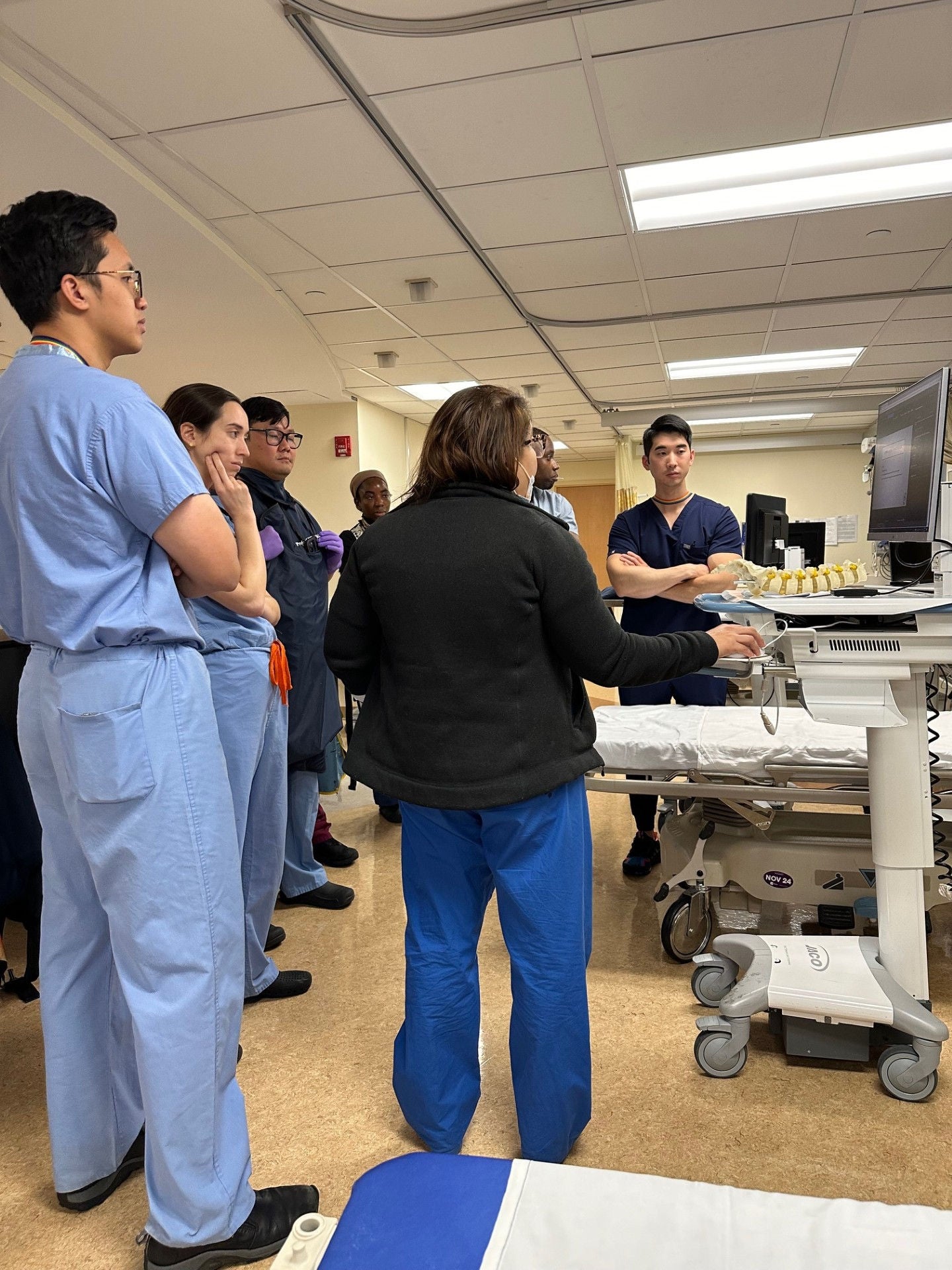
Wellness, Recreation & Life in Boston
Fellow Wellness
The wellbeing of our fellows is a core priority of the MGB Integrated Fellowship program. We are committed to fostering a supportive, collegial, and inclusive environment where our fellows thrive clinically and personally.
- Access to the MGB GME Wellness program and resources
- Department social events and community-building activities through the MGB Anesthesia Social Club
- Annual graduation celebration and recognition events
Living in Boston
Boston is consistently ranked among the best cities in the country for quality of life, cultural vibrancy, and access to outdoor activities. As a fellow training in the heart of the city, you will enjoy:
- World-class dining, arts, music, and sports (Go Sox and Celtics!)
- Exceptional access to outdoor recreation —Ski mountains of New England, and Cape Cod all within reach
- A diverse, welcoming, and intellectually stimulating community
- Excellent public transportation connecting MGH (Cambridge/Longwood area), BWH (Longwood Medical Area), and beyond
- Competitive housing options — see the MGB GME Housing Resources page for guidance.
Benefits, Salary & Program Policies
Benefits
- Comprehensive health, dental, vision, and disability insurance
- Malpractice coverage
- Conference funding (including ASRA annual meeting support)
- Access to the MGB learning management system and ABA Anesthesia Toolbox
Salary
Fellows are compensated at the PGY-5 level. The starting salary for a PGY-5 in 2026 is $102,466. Salary scales are updated annually; please refer to FREIDA (the AMA fellowship and residency database) for the most current figures.
Policies and Contract
All fellow policies, including trainee contracts, duty hour policies, leave policies, and moonlighting provisions, are governed by the Mass General Brigham Office of Graduate Medical Education. Click here (Resources for Current Trainees ❘ Mass General Brigham) to learn more about the governing policies. You may also email us to request more details.”
How to Apply
Selection to the fellowship is highly competitive. Only completed applications are reviewed.
The following information must be submitted to ERAS:
- ERAS Application form
- A copy of your medical school transcript
- Letter of evaluation from the Dean of your medical school (MSPE)
- Copy of USMLE Transcript
- Valid ECFMG Certificate (if applicable)
- Three (3) Letters of Recommendation
MGB Integrated Pain Medicine Fellowship Participates in the National Residency Matching Program (NRMP).
Application Deadline
The ERAS 2028 application season for December Application Cycle programs runs from November 12, 2026 to May 31, 2027 to fill positions beginning in July 2028. Applications are reviewed and interviews are conducted 12 to 18 months prior to the start date of the fellowship.
Program Leadership
Moe Issa, MD
Program Director, MGB Integrated Pain Medicine Fellowship
Missa1@bwh.harvard.edu
Program Administration
Laura Ricci
Fellowship Program Manager
LRICCI@MGH.HARVARD.EDU