MGB Integrated Critical Care Anesthesiology Fellowship
Lead the care of the most complex critically ill patients.
Graduate prepared for the entire spectrum of modern critical care.
Email: lpalmer4@bwh.harvard.edu
1800555555
lpalmer4@bwh.harvard.edu
Email: ekoelnych@mgh.harvard.edu
Welcome from the Program Director
“We have created a unified experience that leverages the complementary strengths of two of the nation’s leading academic medical centers.”
— Louisa Palmer, MBBS, Program Director
Welcome to the Mass General Brigham Integrated Critical Care Anesthesiology Fellowship.
This program was designed with a clear vision: to train the next generation of perioperative intensivists in an environment that combines exceptional clinical exposure, structured education, and individualized career development.
By integrating training across Massachusetts General Hospital and Brigham and Women’s Hospital, we have created a unified experience that leverages the complementary strengths of two of the nation’s leading academic medical centers. Fellows benefit from exposure to the entire spectrum of critical illness, while developing the skills needed to lead multidisciplinary teams in complex, high-acuity environments.
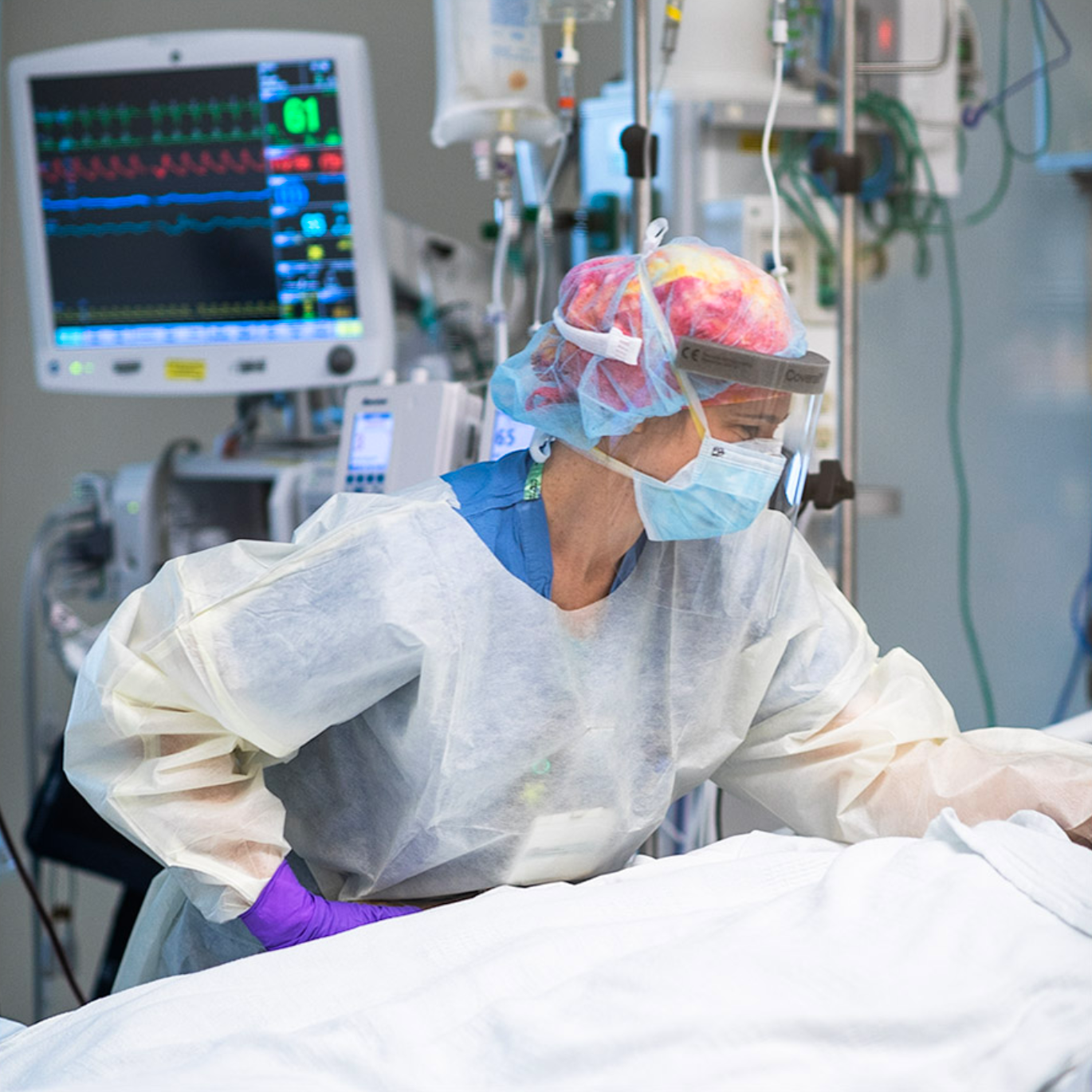
A defining feature of our program is the intentional balance between clinical immersion and structured learning. Fellows are deeply integrated into ICU teams, functioning as key decision-makers from day one — supported by a dedicated and compassionate faculty committed to mentorship, teaching, and clinical excellence.
We are excited to welcome our inaugural class and to build a program that reflects both the excellence and the future of critical care medicine.
Overview
“From day one, fellows function as leaders — directing care, supervising teams, and making high-stakes clinical decisions.”
The MGB Integrated Critical Care Anesthesiology Fellowship is a one-year ACGME-accredited program bringing together the clinical excellence, educational innovation, and academic leadership of two internationally recognized institutions to create a unified and deeply immersive critical care training experience.
Fellows train across diverse ICU environments with high-acuity pathology, gaining exposure to the full spectrum of perioperative and critical care medicine. The integrated structure ensures continuity in training, consistency in expectations, and a cohesive educational experience.
The program is designed not only to develop clinical expertise, but to prepare fellows to become leaders in critical care — across academic medicine, education, and health system innovation.
Training Institutions
- Massachusetts General Hospital
- Brigham and Women's Hospital
This dual-institution model provides an unrivaled breadth of clinical exposure and educational depth.
Core Rotations
The fellowship is structured around core rotations in:
- General Surgical / Trauma ICU
- Cardiothoracic Survery ICU
- Transplant ICU
with additional ICU-focused electives tailored to individual career goals.
What Makes Our Program Unique
- Integrated Dual-Campus Experience
Fellows rotate seamlessly between MGH and BWH, gaining access to distinct patient populations, surgical volume, and subspecialty expertise unavailable at any single institution. The complementary strengths of both campuses create a clinical depth that defines this program. At BWH, fellows are embedded in a busy cardiac surgical ICUs. At MGH, they care for a high-volume lung and liver transplant population. Together, these environments offer truly comprehensive perioperative critical care training. - Fellow as Leader-in-Training
From day one, fellows function as the central clinical decision-maker on the ICU team — leading rounds, supervising residents and APPs, and owning high-stakes patient care decisions. A structured system of graded autonomy allows fellows to advance progressively throughout the year. - Exceptional Cardiothoracic ICU Experience
Unparalleled exposure to advanced heart failure, cardiogenic shock, and the full spectrum of mechanical circulatory support — IABP, Impella, temporary/durable VAD, and VA/VV ECMO — across two high-volume cardiac surgery programs. - Year-Long Critical Care Ultrasound Curriculum
A structured, longitudinal echocardiography program prepares fellows for NBE Advanced Critical Care Echo certification. This is a signature program strength, reflecting the national expertise of Program Director Dr. Louisa Palmer in point-of-care ultrasound education. - Structured, Multi-Modal Education
Three protected didactic sessions per week, including board review, journal club, M&M, ethics and humanism, multidisciplinary case conferences, and mechanical circulatory support teaching. All sessions are recorded and accessible via a centralized digital platform. - Individualized Career Pathways
Fellows select from defined focus areas with dedicated mentors and tailored elective experiences. Focus areas include: trauma and emergency response, respiratory physiology, transplant medicine, mechanical circulatory support, critical care ultrasound, and medical education.
Curriculum and Clinical Rotations
Core Rotations Overview
Rotation
Location(s)
Focus Areas
General Surgical ICU
MGH Ellison 4 BWH Tower 8th Floor
Trauma, emergency surgery, sepsis, ARDS, massive transfusion, multiorgan failure, ICU supervision
Cardiothoracic Surgery ICU
BWH Shapiro 6W MGH Blake 8
Cardiac surgery, advanced heart failure, cardiogenic shock, ECMO, VAD, arrhythmias, heart transplant
Transplant ICU
MGH Blake 12 BWH Shapiro 6E
Liver & lung transplantation, graft dysfunction, VV ECMO, complex coagulopathy, immunosuppression
Core ICU Detail: General Surgical ICU
Fellows care for critically ill patients with acute traumatic injuries, complex perioperative complications, and the full spectrum of common ICU pathologies. They function as the supervisory clinician for the multidisciplinary team, leading clinical decision-making and serving as the primary educator for rotating residents and students.
Key Clinical Focus Areas:
- Sepsis and septic shock
- ARDS and hypoxemic respiratory failure
- Massive hemorrhage and coagulopathy
- Trauma-related multi-organ injuries
- Postoperative complications (anastomotic leak, pulmonary embolism, delirium)
- ICU fundamentals: sedation, ventilator weaning, nutrition, antibiotic stewardship, early mobility
- Emergency triage and resuscitation
Core ICU Detail: Cardiothoracic Surgery ICU
Intensive, high-acuity exposure to postoperative care of adult cardiothoracic surgery patients. Fellows develop sophisticated skills in hemodynamic assessment, mechanical circulatory device management, and multidisciplinary team leadership.
Key Clinical Focus Areas:
- CABG, valve repair/replacement, aortic surgery, complex redo cardiac surgery
- Heart transplantation and VAD management
- Cardiogenic, vasoplegic, obstructive, and hemorrhagic shock states
- Mechanical circulatory support: IABP, Impella, temporary/durable VAD, VA/VV ECMO
- Advanced hemodynamic monitoring and PA catheter interpretation
- Arrhythmia management and pacemaker troubleshooting
- Postoperative coagulopathy and TEG/ROTEM-guided transfusion
Core ICU Detail: Transplant ICU
Advanced transplant critical care across liver and lung transplantation, requiring nuanced decision-making and mastery of communication with multiple subspecialty teams.
Key Clinical Focus Areas:
- Pre- and post-transplant physiology; early graft dysfunction recognition
- Liver transplant: primary graft non-function, hepatic artery thrombosis, post-reperfusion syndrome, complex coagulopathy
- Lung transplant: PGD grading and management, RV failure
- VV ECMO management: physiology, anticoagulation, ventilator strategy, weaning
- Immunosuppression principles: tacrolimus, MMF, corticosteroids, opportunistic infection
Progressive Autonomy
A structured system of graded responsibility allows fellows to advance from supervised to independent clinical leadership over the course of the year. In accordance with MGB Guidelines on Supervision, all fellows are directly supervised by attending critical care anesthesia faculty throughout the fellowship, with autonomy expanding as competence and confidence develop.
Fellows progress from supervised - to guided - to independent practice in the following domains:
- Leading ICU rounds and clarifying management plans for the multidisciplinary team
- Supervising and teaching residents and advanced practice providers
- Managing clinical instability and acute patient deterioration
- Triaging admissions and responding to ICU emergencies
- Leading family meetings and goals-of-care discussions
- Supervising and performing ICU procedures with increasing independence
By Graduation, Fellows Are Prepared To
- Lead multidisciplinary ICU teams in high-acuity environments
- Independently manage the full spectrum of critical illness
- Direct care of complex cardiothoracic, general surgical and trauma ICU patients
- Integrate point-of-care ultrasound into real-time clinical decision-making
- Perform and supervise ICU procedures with confidence
- Navigate complex clinical and ethical decision-making
- Teach and mentor trainees effectively across multiple settings
- Engage in scholarly work and contribute to academic development in critical care
- Transition seamlessly into clinical and academic leadership roles
Elective Rotations
A wide range of elective opportunities allows fellows to develop expertise aligned with individual career interests. All electives may be arranged at either MGH or BWH as available.
Elective Options
Elective Options
Neuro ICU
TTE/TEE Reading Room
Burn ICU
Radiology Reading Room
Critical Care Nephrology
Boston Med-Flight (Critical Care Transport)
Cardiac Care Unit
Bedside Procedure Team
Nutrition/Metabolic Support Service
Regional Anesthesia/Block Team
Infectious Disease Consult
Heart Failure Service
Palliative Care
ECMO Service
Critical Care Ultrasound
Pulmonary Hypertension Service
Vascular Medicine
Education/Simulation Lab
Blood Bank
Research/Quality Improvement
Adult Congenital Heart (Bach Service)
Global Health
OB Critical Care
Weekly Conference Schedule
Fellows participate in three protected didactic sessions per week (12–1pm). All conferences are conducted in hybrid format and recorded, accessible via Microsoft Teams for fellows on night shifts or off-site rotations.
Weekly Conference Schedule
Conference
Frequency
Description
Critical Care Echocardiography
Weekly
Prepares fellows for NBE Advanced Critical Care Echo certification
Board Review Conference
Twice monthly
Board-relevant topics taught by multi-specialty faculty
Journal Club
Monthly
Landmark literature and critical appraisal methodology
Morbidity & Mortality
Monthly
Presentations from all core ICUs; system improvement and education focus
Multi-ICU Joint Case Conference
Monthly
Cross-specialty complex case discussion fostering collaboration
Ethics & Humanism in Critical Care
Monthly
Ethics, wellness, equity, and communication in the ICU
Mechanical Circulatory Support and CSICU topics
Monthly
VV/VA ECMO, temporary/durable VAD, IABP, pacemakers
Simulation & Procedural Training
- Introductory and advanced critical care ultrasound workshops
- Complex airway course (advanced intubation, bronchoscopy, cricothyroidotomy)
- ECMO cannulation introductory course
- Bedside open chest and E-CPR simulation scenarios
Evaluation & Feedback System
- Weekly faculty evaluation prompts distributed to supervising attendings
- Quarterly fellow feedback reviews with Program Director and mentor
- Annual 360-degree evaluations from ICU nursing, APPs, and colleague supervisors
- Anonymous feedback portal for candid fellow input throughout the year
- Clinical Competency Committee meets twice yearly
- Program Evaluation Committee meets annually
- Monthly GME work hours survey with target of 100% compliance
Program Leadership & Faculty
Program Director
Louisa Palmer, MBBS — Program Director
- Board-certified attending anesthesiologist and intensivist, Brigham and Women’s Hospital
- Director, Anesthesia Critical Care Medicine Fellowship (since 2021)
- Director, Critical Care Ultrasound, BWH Department of Anesthesiology
- Assistant Professor of Anaesthesia, Harvard Medical School
- NBE Advanced Critical Care Echocardiography Testamur. Certified Basic Perioperative Transesophageal Echocardiography.
- Member, SOCCA Program Directors Critical Care Ultrasound Subcommittee
- National recognition in point-of-care ultrasound education
- Research interests: Cardiac urgery ICU outcomes, ICU quality improvement, Medical education, POCUS education
- Clinical time divided between CSICU and SICU
- Contact: lpalmer4@bwh.harvard.edu
Program Leadership Committee
- Dr. Kenneth Shelton — MGB Division Chief, Anesthesia Critical Care Medicine
- Dr. Daniela Lazea — BWH Surgical ICU Co-Director
- Dr. Jean Kwo — MGH Surgical ICU (E4) Director
- Dr. Domagoj Mladinov — BWH Cardiac Surgical ICU Director
- Dr. Aranya Bagchi — MGH Heart Center ICU Director
- Dr. Alissa Sodickson — BWH Thoracic Surgical ICU Director
- Dr. William Benedetto — MGH Transplant ICU (B12) Director
- Drs. Lorenzo Berra and Maurizio Cereda — Senior Critical Care Research Directors
- Dr. Alissa Sodickson – BWH Senior Anesthesia Critical Care Site Director
- Dr. Aranya Bagchi – MGH Senior Anesthesia Critical Care Site Director
- Dr. Louisa Palmer
- Dr. Edward Bitner
- Dr. William Benedetto
- Dr. Lorenzo Berra
- Dr. Jean Kwo
- Dr. Marvin Chang
- Dr. Ryan Horvath
- Dr. Jonathan Parks
- Dr. Katarina Ruscic
- Dr. Daniel Saddawi-Konefka
- Dr. Kenneth Shelton
- Dr. Abraham Sonny
- Dr. Diana Barragan Bradford
- Dr. Maurizio Cereda
- Dr. Michael DeWane
- Dr. Timothy Gaulton
- Dr. Casey Luckhurst
- Dr. Ilan Mizrahi
- Dr. Takashi Sakano
- Dr. Yvonne Lai
- Dr. Shu (Denis) Lu
- Dr. Benjamin Steinhorn
- Dr. Lauren Gibson
- Dr. Elisa Wash
- Dr. Caroline Gross
- Dr. Yasmine Temeze
- Dr. Gyorgy Frendl
- Dr. Suzanne Klainer
- Dr. Daniela Lazea
- Dr. Raghu Seethala
- Dr. Joshua Vacanti
- Dr. Matthias Stopfkuchen-Evans
- Dr. Matthew Grunert
- Dr. Arthur Formanek
- Dr. Joshua Finkel
- Dr. Bushra Taha
- Dr. Alissa Sodickson
- Dr. Abram Feldman
- Dr. Maximillian Hoffman
- Dr. Michael Furdyna
- Dr. Domagoj Madinov
- Dr. Jakob Wollborn
- Dr. Jerome Crowley
- Dr. Rachel Steinhorn
- Dr. Stephan Hain
- Dr. Gina Sun
Research, Scholarship & Academic Development
The program is committed to developing fellows as academic leaders in critical care medicine. Fellows benefit from access to large clinical datasets, multidisciplinary collaborations, and established research infrastructure across both institutions.
Research Infrastructure
- Access to established research programs at both MGH and BWH
- Mentorship from experienced clinician-investigators
- Research Personnel Data Repository (RPDR) and EDW access
- Opportunities in clinical research, education research, and quality improvement
- Program leadership includes senior research faculty Drs. Lorenzo Berra and Maurizio Cereda
Scholarly Expectations
- Present at least one abstract or case report at the annual SOCCA meeting
- Participate in unit-based quality improvement initiatives and M&M conferences
- Develop case reports, abstracts, or manuscripts with faculty mentorship
- Academic productivity tracked as a key program outcome metric
Career Pathways for Graduates
- Academic critical care at peer institutions
- Clinical leadership roles within MGB
- Medical education faculty positions
- Research and clinical innovation tracks
How to Apply
Who Should Apply
We seek motivated, intellectually curious physicians committed to excellence in critical care medicine. This program is particularly well suited for applicants who aspire to lead in high-acuity clinical environments, value both clinical rigor and structured education, and seek mentorship and academic career development.
Eligibility Requirements
- Graduation from an ACGME-accredited program in Anesthesiology, Surgery, or Obstetrics & Gynecology
- Outstanding international graduates considered individually under MGB GME guidance (for candidates from non-ACGME-accredited overseas programs)
- Commitment to a career in academic critical care medicine
- All fellows receive PGY-5/6 salary level (combined fellows may complete cardiac anesthesia fellowship prior to CCM)
- Visa sponsorship: please contact the MGB International Office for information
Application Process
- Applications submitted via the national SF Match process
- Program advertised through SOCCA, ACGME, and the MGB GME recruitment platform
- Interviews conducted by the Program Director, Associate Program Director, and faculty selection committee
Important Dates - Inaugural 2028 Class
Event
Date / Timeline
Applications Open
Fall 2026 (via SF Match)
Interview Season
Winter/Spring 2026-2027
Match Day
May 2027
Inaugural Class Begins
July 2028
Contact
Program Director: Louisa Palmer, MBBS - lpalmer4@bwh.harvard.edu
Program Coordinator: Elizabeth Koelnych - ekoelnych@mgh.harvard.edu
SOCCA Website: https://www.socca.org
MGB GME Hub: https://partnershealthcare.sharepoint.com/sites/MGBGMEHub
Additional Elements
Alumni Testimonials / Quotes
“For me, the biggest draw of the ICU fellowship was always the people. Medical training is still very much an apprenticeship, even though we don’t often think of it in those terms. As a resident at Brigham, nearly every attending I looked up to was Critical Care trained. They were all hyperintelligent- that much is almost a given- but it went beyond that. It was how the surgeons spoke to them, how they carried themselves, and how dedicated they were, not just to ensuring the patient survived the next hour or two, but to understanding and participating in the entire treatment course. I wanted to be a part of that tradition- wanted it to be a part of me. Back then, I was absolutely certain I was going to spend my career practicing CT anesthesia and working in a CSICU, but you never know where your career is going to take you. Even though I don’t round in an ICU anymore, I still practice ICU medicine every day working in private practice at a busy county hospital and level 1 trauma center, and the nonclinical skills I gained are in constant use running a large anesthesia group. My ICU fellowship at BWH was without a doubt my most formative year of training- I can’t recommend it highly enough.”
David M. Buric, MD
Vice Chair
Cardiothoracic Anesthesiologist
East Carolina Anesthesia Associates, PLLC
Wakemed Health and Hospitals
E: dburic@ecaa.com
_____
"I decided to choose MGH for fellowship due to its exposure to a wide range of surgical as well as medical acuity in the ICUs. The faculty are very invested in making sure fellows have graduated autonomy which helped prepare me well for independent practice. The schedule allows for individualization of the experience with the elective weeks throughout the year, which makes it fun and rewarding. In addition, it is wonderful to have co-fellows from both anesthesia and surgical backgrounds as we all learned from each other!"
Blake Mergler, MD
Assistant Professor of Clinical Anesthesiology and Critical Care
Perelman School of Medicine, University of Pennsylvania
3400 Spruce St, Philadelphia, PA 19104
_____
"I chose to pursue my fellowship at Brigham and Women’s for two main reasons. First, it was the people at the institution. It was clear even from my virtual interview that people were happy to be there and that there was a strong, collegial atmosphere focused on learning. This proved to be true when I arrived at the program. I not only made close friends with my co-fellows, but I was also supported by our attendings, who treated us more like colleagues than trainees.
The second reason I chose Brigham was the breadth of training we receive. I enjoy all aspects of critical care, and the opportunity to rotate through and learn in a wide variety of ICUs was a major advantage. The curriculum was also flexible enough to allow each fellow to tailor their training to best prepare them for their future practice, wherever that may be.
Brigham prepared me for independent practice in many ways. The progressive autonomy I was given throughout the year allowed me to gradually build confidence and independence, ultimately preparing me to take ownership of the unit and act as the attending. The longitudinal POCUS training also made me very comfortable incorporating POCUS into my everyday practice. Although Brigham goes above and beyond to provide excellent clinical training, the program also equips you with the communication and leadership skills needed to effectively collaborate with multidisciplinary teams.
Brigham and Women’s critical care fellowship provides you will all the tools and knowledge that you need to become a well rounded and skilled critical care physician. I would recommend this program to anybody that is applying."
Nola Darden, DO
Assistant Professor, Anesthesiology and Perioperative Medicine
Penn State College of Medicine
700 HMC Crescent Road
Hershey, PA 17033
_____
"I am pleased to provide a testimonial for the Anesthesiology Critical Care Fellowship at BWH, under the directorship of Dr. Louisa Palmer and the faculty team.
I chose BWH for its internationally renowned academic setting, diverse case population, and access to unique ICU units. I sought a program with some night and weekend call responsibilities as this would best prepare me for attending life. The Burn ICU, Lung Transplant ICU, and the program's strong focus on cardiac surgery ICU and advanced mechanical circulatory support stood out immediately. The partnership between Mass General and Brigham further opened elective opportunities in specialized areas like mobile/airborne and liver transplant ICU care.
The training was exceptional. Faculty members bring a breadth and depth of expertise that expose fellows to cases I imagine are scarce elsewhere, and the POCUS critical care modules are exemplary. The longitudinal, focused training in cardiac surgery critical care and advanced mechanical circulatory support proved especially invaluable — from my first days as an attending, I felt well-prepared, particularly in cardiac surgery critical care, thanks to the knowledge, competency, and comfort built during fellowship.
The curriculum and schedule can be demanding, but in hindsight, that rigor prepared me well for the realities of attending responsibilities. Even in such a short year, fellowship training is grueling by design when done right, and what made the difference was the support system of family, friends, and faculty. That sense of community here is something that has stayed with me. The experiences and knowledge I gained here left me well-prepared for practice as an attending, a fact my peers and colleagues often remark on. I would choose this program again without hesitation, and I recommend it to anyone seeking rigorous training plus that extra something that sets this program apart."
Nicholas Zwolinski, MD
Yale University School of Medicine Anesthesiology and Critical Care
20 York Street New Haven, CT 06510
nicholas.zwolinski@yale.edu
Living in Boston
Boston is one of the world’s great cities for medicine, education, and quality of life. Fellows training in the MGB fellowship programs have access to everything this city has to offer — from world-class culture and dining to an extraordinary network of colleagues and collaborators.
Hospital Locations
Fellows split their training between two iconic Boston campuses, both easily accessible by public transit and situated in vibrant neighborhoods.
- Brigham and Women’s Hospital — 75 Francis Street, Boston, MA 02115. Located in the Longwood Medical Area (LMA), one of the densest concentrations of biomedical research and clinical care in the world. Accessible via MBTA Green Line (E branch, Brigham Circle station) and multiple bus routes.
- Massachusetts General Hospital — 55 Fruit Street, Boston, MA 02114. Located on the north side of Beacon Hill, steps from the Charles River and downtown Boston. Accessible via MBTA Red Line (Charles/MGH station) and multiple bus routes.
Neighborhoods & Housing
Boston offers a wide range of neighborhoods to suit different lifestyles and budgets. Many fellows live within walking or biking distance of one campus, with easy access to the other by public transit. Popular neighborhoods include:
- Mission Hill — directly adjacent to BWH and the Longwood Medical Area; popular with residents and fellows for its proximity and more affordable rents.
- Jamaica Plain — vibrant, green, and diverse; well-connected to both campuses; home to the Arnold Arboretum and Jamaica Pond.
- Beacon Hill / West End — historic, walkable neighborhood close to MGH; cobblestone streets, independent shops, and the Charles River Esplanade.
- South End / Fenway — lively urban neighborhoods between both campuses with a thriving restaurant scene, arts venues, and excellent transit connections.
- Brookline / Newton — quieter, suburban feel with excellent schools; popular with fellows with families; convenient to BWH via Green Line.
- Somerville / Cambridge — popular with academics; eclectic, walkable, and well-connected; easy Red Line access to MGH.
MGB GME offers a dedicated housing guide and can connect incoming fellows with current trainees for advice: MGB GME Housing Resources
Getting Around
- Public Transit (MBTA): Boston’s T is the primary mode of transport for most fellows. Both campuses are well-served by the Green and Red Lines. Monthly MBTA passes are subsidized through MGB’s commuter benefits program.
- Cycling: Both hospitals have secure bike parking. The Bluebikes bike-share network provides affordable point-to-point travel across Boston, Cambridge, and Brookline, with stations near both campuses.
- Driving & Parking: On-street parking is limited in central Boston. MGB offers subsidized parking at both campuses, with shuttle connections to satellite lots. Car ownership is not necessary but is manageable for those living in outer neighborhoods or suburbs.
- Between Campuses: The two hospitals are approximately 3.5 miles apart. Most fellows travel between sites via the T (~20 minutes), rideshare, or bicycle. Overnight and weekend shifts are site-specific, so inter-campus commuting is not required during clinical blocks.
Things to Do
Boston offers an exceptional quality of life outside the hospital. Whether you’re a sports fan, outdoor enthusiast, foodie, or arts lover, the city has something for everyone.
- Sports: Home to the Red Sox (Fenway Park, steps from BWH), Celtics, Bruins, and Patriots. Boston has one of the most passionate sports cultures in the country.
- Outdoors: The Emerald Necklace park system, Charles River Esplanade, and Blue Hills Reservation offer year-round running, cycling, kayaking, and hiking. Cape Cod, the White Mountains, and Vermont ski resorts are all within 2–3 hours.
- Food & Dining: Boston’s culinary scene has expanded dramatically in recent years. The South End is a destination for independent restaurants; Cambridge and Somerville offer a wide range of global cuisines; and the North End remains one of America’s great Italian-American neighborhoods.
- Arts & Culture: The Museum of Fine Arts, Isabella Stewart Gardner Museum, Boston Symphony Orchestra, and numerous independent galleries and theatres make Boston a genuinely rich cultural destination.
- Academic & Social Community: Fellows join a large community of trainees across MGB, with access to the MGB Anesthesia Social Club, department events, and the broader Boston academic medicine social network.
Useful Links
- MGB GME Wellness & Housing Resources
- MGB GME Living in Boston Guide: Lease Guarantee Resources and Housing
- MBTA Trip Planner: https://www.mbta.com
- Bluebikes Bike Share: https://www.bluebikes.com
Benefits & Salary
Salary: PGY-5/6 level per MGB Resident Salary Scale. Link to: MGB GME Policies page.
Benefits: Standard MGB Graduate Trainee contract. Questions about CIR bargaining unit should be directed to John Co, VP of Graduate Medical Education.
FAQs
About the Program

Applying
Salary, Benefits & Contracts
Work Hours & Call
Training & Career Development
Still Have Questions?
Email: ekoelnych@mgh.harvard.edu
1800555555
ekoelnych@mgh.harvard.edu
Email: lpalmer4@bwh.harvard.edu
1800555555
lpalmer4@bwh.harvard.edu