Medical Laboratory Science Training Program
Program overview
Instruction in an integrated health system
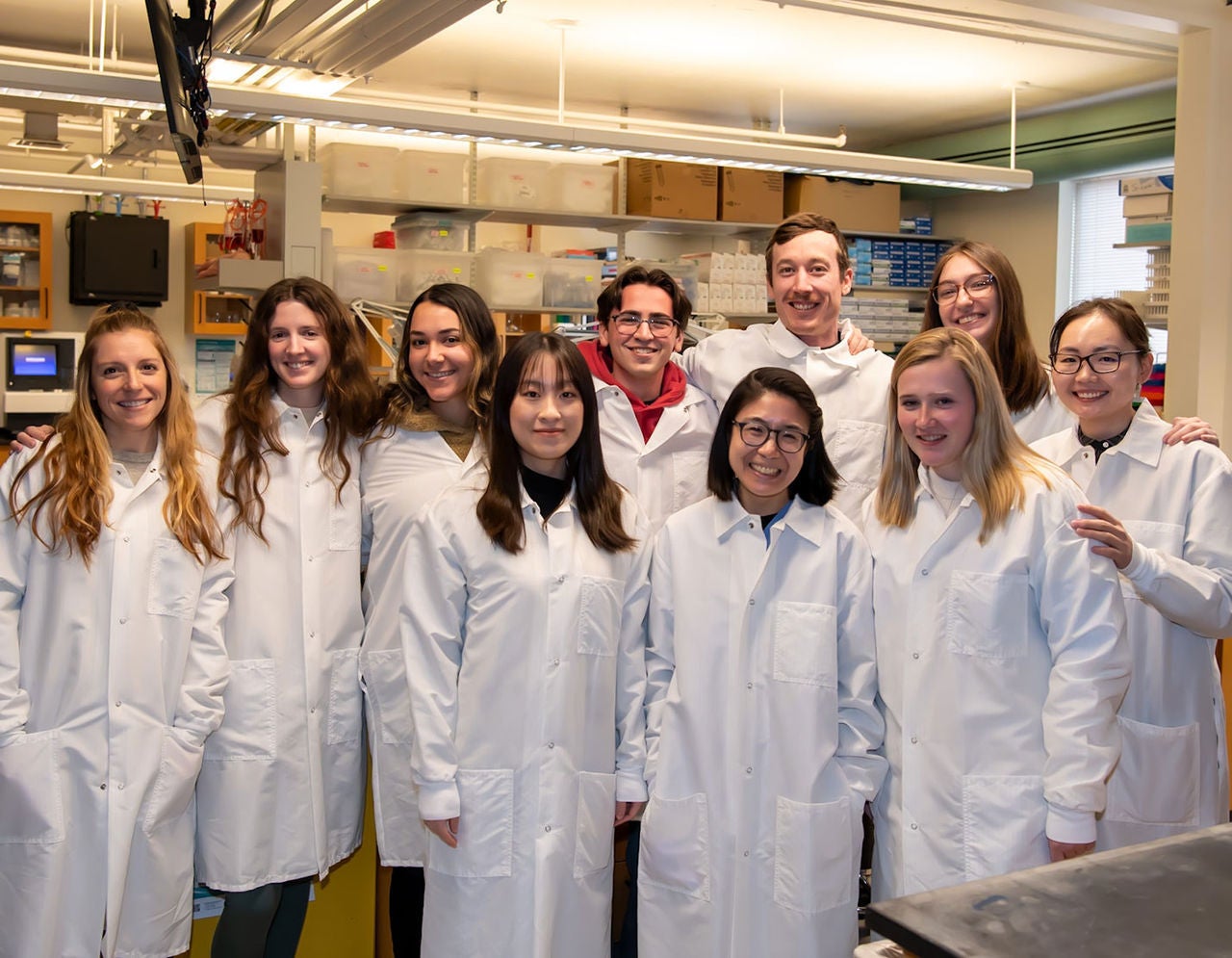
The Mass General Brigham Medical Laboratory Science (MLS) Training Program is designed to prepare students for a career in the dynamic and ever-evolving field of laboratory medicine.
The Mass General Brigham MLS program trains future laboratory scientists through a rigorous and integrated curriculum, including hands-on didactic instruction, on-site clinical experiences, and online learning. As a student in the program, you will train under highly experienced laboratory professionals employed by Mass General Brigham Clinical Laboratories.
Students will develop the technical and critical thinking skills required to safely and accurately perform complex laboratory testing by applying sophisticated methodology and instrumentation used to detect, diagnose, and monitor human disease. Students will also be trained in facets of laboratory operations, including management and quality assurance of laboratory services for all major disciplines in a contemporary clinical laboratory. Upon completion of the program, students will be eligible to sit for the national certification exam by the American Society for Clinical Pathology to become a certified laboratory scientist.
Graduates of our program will have the competency and experience to perform, develop, evaluate, correlate, and assess the quality and validity of laboratory results, in addition to the ability to lead, troubleshoot, and problem solve in collaboration with members of the health care team.
The MLS training program is an excellent opportunity to train at one of the nation’s most prestigious teaching institutions. The Mass General Brigham MLS training program is focused on building the Mass General Brigham system laboratory workforce, with a variety of laboratory career opportunities available at MGB Members and Affiliates upon graduation.
Program mission, vision, and goals
The education goals of the MLS Program reflect Mass General Brigham’s commitment to education by training, teaching, and educating the next generation of laboratory professionals.
- The goals of the MGB MLS Program are as follows:
- Provide high-quality instruction in all major laboratory disciplines relevant to the practice of medical laboratory science
- Prepare students with the technical skills and theoretical knowledge necessary to function competently in the field of medical laboratory science
- Provide an educational environment that fosters curiosity, critical thinking, and academic growth
- Develop foundational knowledge of laboratory-related quality control, and foster an appreciation for quality assurance and improvement initiatives impacting daily laboratory operations
- Promote ethical behavior as a foundation for leadership and education
- Encourage professional curiosity and instill the value of continuing education for growth and maintenance of professional competence
- Prepare students to contribute to an interprofessional healthcare team by working collaboratively with other healthcare professionals to improve patient safety and provide patient-centered care
- Provide an atmosphere that promotes polite and professional communication between colleagues, patients, and all members of the healthcare team
- Prepare graduates to task-switch effectively to meet the demands of typical workforce conditions and provide simulated and real-world experiences that enhance their ability to work under pressure safely and effectively
- Prepare medical laboratory science graduates for entry-level positions in the workforce
- Provide our community with highly skilled, competent, professional, and ethical medical laboratory scientists
The Mass General Brigham Medical Laboratory Science Program is accredited by the National Accrediting Agency for Clinical Laboratory Sciences (NAACLS).
NAACLS5600 N. River Rd., Suite 720
Rosemont, IL 60018-5119
Phone: (773) 714-8880
Email: NAACLS@naacls.org
The following outcome measures are tracked and monitored as part of continuous program assessment required for accreditation.
| 2024 | 2025* | |
| Graduation Rate Students who began the final half of the program and went on to successfully graduate |
85% | 100% |
| Employment Rate Graduates who either found employment in the field (for those who seek employment) or continued their education within one year of graduation |
100% | 100% |
| BOC Pass Rate Graduates who passed the ASCP BOC exam within one year of graduation |
89% (8 of 9) | 96% (21 of 22) |
| Number of Students | 13 Cohort 1: 6 Cohort 2: 7 |
22 Cohort 1: 9 Cohort 2: 13 |
Curriculum
The Medical Lab Science (MLS) Training Program at Mass General Brigham is designed to offer students high-quality laboratory science education and hands-on training in a student simulation laboratory. The MLS training program trains future laboratory scientists through a rigorous and integrated curriculum, including hands-on didactic instruction, on-site clinical experiences, and online learning.
The program consists of a didactic training block and clinical training block.
Didactic training block
For the first seven months, student will learn the fundamentals of medical laboratory science with lectures and hands-on laboratory experiences in each of the major laboratory disciplines. The didactic component of the MLS program has been divided into major and minor coursework. Major courses include Clinical Chemistry, Hematology, Immunohematology, and Microbiology. Minor courses include Introduction to Medical Laboratory Science & Laboratory Practice, Clinical Immunology & Serology, Clinical Hemostasis, Urinalysis & Body Fluids, Molecular Diagnostics, and Lab Management & Quality. All courses, expect for Lab Management & Quality, will include both in-person lecture and laboratory sessions.
The didactic component of the program is presented with an integrative curriculum, with students taking two major courses simultaneously separated by the minor coursework. The courses are mapped in a logical sequence to equip students with the prerequisite knowledge needed to foster connections among each of the laboratory disciplines in our 7-month program. Students must pass each didactic course to progress to the clinical training block of the curriculum.
Clinical training block
The clinical training block is a three-month clinical experience at one of the affiliated Mass General Brigham hospital clinical laboratories. Students will complete rotations in each of the major laboratory disciplines: chemistry, hematology & coagulation, immunohematology, microbiology, and urinalysis. Students will be required to meet specific competencies while on each rotation.
The MLS program is a 10-month, full-time, in-person program. The didactic training block runs Monday through Friday from 9:00 AM to 4:00 PM at the MLS Training Laboratory located in Boston, MA.
While in the clinical training block, students will report to the Mass General Brigham clinical affiliate for 8 hours, with start times varying from site to site.
Academic calendars
Students must complete the entire program to graduate and meet eligibility to sit for a board of certification exam. Criteria for acceptable performance are determined by the student’s academic, practical, and professional performance throughout the entire program. Details and standards regarding academic progression criteria required to complete the program can be found in the Program Policies section of the student handbook.
Upon successful completion of the 10-month MLS program, students will be awarded a certificate of completion.
The Mass General Brigham Medical Laboratory Science Program is accredited by the National Accrediting Agency for Clinical Laboratory Sciences (NAACLS).
MLS Program graduates are eligible to sit for the Medical Laboratory Science board of certification exam (BOC) through Route 1 of the American Society for Clinical Pathology (ASCP).
Certification is a voluntary process. We encourage all graduates to seek certification within 12 months of graduation.
Applicants are responsible for researching and ensuring they meet all state-specific licensure requirements upon completion of the program. Requirements may vary by state and may impact an applicant's ability to practice. We strongly encourage applicants to contact their relevant state licensing boards for the most current information.
*California Applicants: The Mass General Brigham MLS program does not meet direct licensure requirements for the State of California. Graduates must obtain a CLS Trainee license and complete at least one year of generalist laboratory work before they are eligible for California licensure.
Faculty of the Medical Laboratory Science Training Program.
Jennifer Nicoloro, PhD, MLS(ASCP)CM
MLS Training Program Director
MLS Instructor
Nicolas Troisi, MS, MLS(ASCP)CM
MLS Training Program Manager & Clinical Coordinator
MLS Instructor
Kristin Palladino, MS, MLS(ASCP)CM
BWH Senior Medical Technologist
MLS Instructor
Elizabeth Szymczak, MS, MT(ASCP)
MLS Training Program Consultant
MLS Instructor
Abigail Auger, BS, MLS(ASCP)CM
MLS Laboratory Instructor
Mass General Brigham Clinical Laboratory Medical Directors, Supervisors, and Senior Techs, in addition to Brigham & Women’s and Mass General Hospital Clinical Pathology residents, will provide supplemental lectures in their area of expertise.
Brigham & Women’s Hospital: 75 Francis St. Boston, MA 02115
Brigham & Women’s Faulkner Hospital: 1153 Centre St, Jamaica Plain, MA 02130
Cooley Dickinson Hospital: 30 Locust St, Northampton, MA 01060
Harbor Medical Associates: 541 Main St. Suite 114, South Weymouth, MA 02190
Massachusetts General Hospital: 55 Fruit St, Boston, MA 02114
Newton-Wellesley Hospital: 2014 Washington St, Newton, MA 02462
Salem Hospital: 81 Highland Ave, Salem, MA 01970
Wentworth Douglass Hospital: 789 Central Ave, Dover, NH 03820
MLS.4000 Introduction to Medical Laboratory Science & Laboratory Practice
The course will serve as an introduction to basic clinical laboratory practices and techniques, including principles of laboratory safety, patient confidentiality, specimen collection, handling, and processing, and control of pre- and post-analytic variables. Basic laboratory math concepts and professional ethics will follow. Laboratory exercises will focus on microscopy, pipetting, and solution preparation.
MLS.4100 Clinical Immunology & Serology
Basic immunological techniques will be explored in this course which introduces the fundamental concepts of immunology, focusing on the molecules, cells, and tissues associated with the recognition of substances that can elicit an immune response, the various mechanisms via which immune responses are initiated and executed upon recognition of these substances, and the biochemical and physiological regulatory pathways of immune responses. The applications of immunological principles will be explored through serological methods and antigen-antibody reactions. Serological methods will be elucidated for the diagnosis of infectious and autoimmune conditions and disease.
MLS.4120 Molecular Diagnostics
Topics in molecular diagnostics will be discussed in this course by providing an overview of molecular biology and the clinical application of molecular techniques used to diagnose and manage human disease. Techniques discussed include specimen collection and handling, DNA purification, direct and amplified nucleic acid testing, Southern blot analysis, in addition to semiautomated and automated methods. Students will perform hands on laboratory activities in addition to interpretation of clinical data.
MLS.4130 Laboratory Management & Quality
This course will acquaint the student with the many managerial, educational, technical, and administrative theories and practices, as well as moral and ethical issues that may confront the health care professional functioning within a clinical or research laboratory setting. The course will also delve into the topics of total quality management and the processes and responsibilities associated with it.
MLS.4200 Clinical Hematology
This course introduces the study of normal and pathologic hematology, with emphasis on hematopoiesis, cellular components, and morphology as they relate to the field of medical laboratory science. Topics include the diagnosis and management of blood cell disorders, as well as the analysis, classification, and monitoring of blood cell abnormalities. The laboratory portion of the course focuses on routine hematology procedures, including cell enumeration, identification, and recognition of abnormalities in peripheral blood.
MLS.4210 Clinical Hemostasis
This accelerated course provides an in-depth study of normal and disordered hemostasis, with emphasis on routine and advanced laboratory testing and clinical applications. Students will gain experience with key test methodologies and instrumentation while developing skills to correlate laboratory findings with clinical presentations through case-based reasoning. The course emphasizes result interpretation, quality assurance, and the critical role of the medical laboratory scientist in hemostasis testing.
MLS.4300 Clinical Chemistry
This course provides a detailed study of the biochemical substances and processes essential to human health and disease. Topics include normal biochemistry and physiology, test procedure, result interpretation, and disease correlation of lipids, proteins, carbohydrates, heme derivatives, electrolytes, and acid-base balance. Additional emphasis is placed on hormones, endocrinology, vitamins, nutrition, therapeutic drug monitoring, and toxicology. Students will explore principles of analytical methodology, instrumentation, and laboratory automation. The course emphasizes the correlation of laboratory findings with the diagnosis and management of various medical conditions. Hands-on laboratory exercises complement lecture material, focusing on test performance, data interpretation, and quality assurance.
MLS.4310 Urinalysis & Body Fluids
This course explores the analysis and interpretation of urine and various body fluids. Through a combination of lectures and practical laboratory exercises, students will develop a thorough understanding of the principles and. The course covers a wide range of topics, including the anatomy and physiology of the renal system, the formation and composition of urine, the identification and significance of normal and abnormal constituents, and the microscopic examination of urinary sediment. Additionally, students will gain practical experience in handling and analyzing other body fluids such as cerebrospinal fluid, pleural fluid, synovial fluid, and peritoneal fluid. With a focus on quality control, safety protocols, and the use of advanced laboratory instruments, students will be equipped with the skills to accurately interpret test results, troubleshoot technical issues, and effectively communicate findings to healthcare professionals.
MLS.4400 Clinical Microbiology I
This course consists of instruction in the basic principles and diagnostic test methods of Clinical Microbiology with a focus on bacteriology. The clinical significance of commonly isolated pathogenic and non-pathogenic bacteria will be covered in detail, along with the laboratory procedures required for routine identification and antimicrobial susceptibility testing of these organisms.
MLS.4410 Clinical Microbiology II
This course consists of instruction in the basic principles and diagnostic test methods of Clinical Microbiology with a focus on mycology, parasitology, and virology. The student will be introduced to the taxonomy, life cycles, clinical significance, and laboratory identification of pathogenic and non-pathogenic fungi and parasites. Virus structure and the association between viruses and clinical disease will also be discussed.
MLS.4500 Clinical Immunohematology
This course explores the principals, techniques, and clinical significance of major blood group antigens and antibodies. Topics will include compatibility testing, antibody screening and identification techniques, blood donation and donor selection, transfusion therapy, record keeping, and quality control. The laboratory portion of the course is designed to provide the student with practical experience with foundational laboratory techniques used in the blood bank. The lab will reinforce lecture concepts, including ABO and Rh typing, identification of other red cell antigens, antibody screening and identification, direct antiglobulin testing, cross-matching, and other advanced techniques.
MLS.4600 Clinical Practicum I: Clinical Hematology & Hemostasis
This course consists of supervised clinical training in the hematology department at an affiliated laboratory. Students will rotate through the core hematology laboratory, including hemostasis. Students will participate and gain hands-on experience with hematology and coagulation instrumentation, quality control, instrument maintenance and operation, result interpretation, critical value reporting, and applying troubleshooting skills to different lab situations.
MLS.4610 Clinical Practicum II: Clinical Chemistry & Urinalysis
This course consists of supervised clinical training in the chemistry and urinalysis departments at an affiliated laboratory. Students will rotate through various benches in the core chemistry lab (elective specifical chemistry lab if available) and urinalysis. Students will participate and gain hands-on experience with multiple clinical chemistry instruments and methodologies, quality control, instrument maintenance and operation, result interpretation, critical value reporting, and application of troubleshooting skills.
MLS.4620 Clinical Practicum III: Immunohematology
This course consists of supervised clinical training in the immunohematology department at an affiliated laboratory. Students will rotate through various benches in the assigned blood bank department. Students will participate and gain hands-on experience with various techniques used in the blood bank to identify antibody/antigen interactions, interpret serologic and clinical data used in the procurement, selection, and preparation of safe blood products for transfusion.
MLS.4630 Clinical Practicum IV: Clinical Microbiology
This course consists of supervised clinical training in the microbiology department at an affiliated laboratory. Students will rotate through the various benches of the bacteriology laboratory. Students will participate and gain experience in performing methods used to isolate and identify clinically significant bacteria, in addition to susceptibility testing. Students will also rotate through either the TB, mycology, parasitology, or virology laboratory.
The Mass General Brigham MLS Student Handbook provides details on program requirements and policies. The handbook is updated annually.
Eligibility
The MLS program is a postbaccalaureate (4+1) program. Students with a baccalaureate degree who meet the eligibility requirements and have completed the pre-requisite coursework are eligible to apply.
Baccalaureate degree from an accredited college or university with either
- Bachelor of Science degree in biological science or chemistry, including the required prerequisite course work
- Other major with 30 semester hours (45 quarter hours) in biology and chemistry, including the required prerequisite coursework
Additional Requirements for Degrees Conferred Outside the United States
Applicants whose undergraduate degree was awarded by an institution outside the United States must fulfill the following additional requirements:
-
Foreign Transcript Evaluation: Transcripts must be evaluated by an ASCP-approved credential evaluation agency - ASCP Evaluation Agencies for Foreign Transcripts. Evaluations must include:
- A statement of degree equivalency confirming the degree is equivalent to a U.S. bachelor’s degree and includes the required biology and chemistry coursework.
- A course-by-course evaluation outlining the number of credits and individual course grades.
-
TOEFL iBT Scores: If the degree was conferred by an institution in a country where English is not the official language, the applicant must submit official TOEFL iBT scores. Scores must be sent directly from the testing agency and received by the program by the application deadline. Applicants from countries where English is the official language are exempt from this requirement.
Additional Requirements for Applicants Graduating After the Application Deadline
Applicants who have not yet completed their bachelor’s degree at the time of application may still apply, provided the following conditions are met:
-
A letter of good standing must be submitted from the applicant’s academic advisor on official institutional letterhead, confirming that the applicant is on track to:
- Graduate prior to the start of the MGB MLS Program, and
- Meet all prerequisite coursework requirements in biology and chemistry.
-
This letter must be submitted by the application deadline. Final transcripts confirming degree conferral will be required before matriculation.
GPA of 2.750 or higher on 4.000 scale
Science GPA and Cumulative GPA are both evaluated as part of the admissions screening process.
Completion of the prerequisite coursework
Students are expected to have a strong academic record in biological and chemical sciences. All applicants must meet the chemistry and biology credit requirements, including the required prerequisite courses, to be eligible to apply. All prerequisite coursework must be completed with a grade of C or higher. Individual prerequisite course grades are reviewed as part of a comprehensive admissions screening rubric. To assist you in assessing your academic eligibility, use the MGB MLS Academic Eligibility Evaluation Guide (PDF)
For any in-progress coursework at the time of application, proof of enrollment must be submitted. An official transcript must be submitted once the in-progress coursework has been completed.
Biological Sciences: A minimum of 16 credit hours (24 quarter hours) including:
- One semester of Human Physiology or Anatomy & Physiology (laboratory strongly recommended)
- Microbiology with laboratory or Molecular/Cell Biology with laboratory
Chemistry: A minimum of 16 semester hours (24 quarter hours) including:
- Organic Chemistry with Laboratory
Math: At least one of the following college-level mathematics courses
- Algebra
- Pre-calculus
- Calculus
- Statistics
The following courses are strongly recommended:
- Biochemistry
- Genetics
- Immunology
- Molecular Biology
Meet MLS program technical standards
In addition to academic standards, students are required to be made aware of non-academic or technical standards that are necessary for students to successfully complete the MLS or Categorical program. Technical standards refer to a candidate’s physical, cognitive and behavioral attributes. Technical standards for the Mass General Brigham MLS program have been developed in compliance with the National Accrediting Agency for Clinical Laboratory Science (NAACLS). Mass General Brigham will provide equal opportunities to all applicants without regard to race, color, religion, gender age, national origin, disability, marital status, genetic information, veteran or active military status, gender identity or expression, or sexual orientation.
View technical standards (PDF)
Additional requirements for accepted students
Accepted students will be required to submit several requirements to be eligible to attend the 4-month clinical training block. Required documentation is due at the start of the program and includes:
- Health Clearance - Immunization and Health records
- Background and Criminal History Check
- MLS Program Policy Acknowledgements
Additional requirements and policies can be found in the MLS Student Handbook (PDF.
The program is open to U.S. workers in the categories below. Visa sponsorship is not available at this time.
- U.S. citizens
- U.S. nationals
- Lawful and permanent residents
- Refugees and asylees
Tuition
Tuition for the MLS Program will be established on an annual basis by the program director and laboratory service executives. Students are responsible for paying all tuition and fees by the dates outlined in their acceptance letter.
| Item | Cost |
| Acceptance Fee | $100 |
| Tuition for 10-month program (2023-2025) | $5,500 |
| Textbook & educational supplies* | $600 |
| Estimated cost of 10-month program | $6,200 |
*Estimated cost based on current textbook pricing
Application Process & Instructions
The MGB MLS program runs two cohorts a year: January and July. Each cohort accepts 14 students.
The training laboratory is located at 221 Longwood Ave, Boston MA.
| Cohort | Program start date | Application deadline | Application link |
| Cohort 2 2026 | July 6, 2026 | March 23, 2026 | Cohort 2 2026 application |
| Cohort 1 2027 | January 11, 2027 | September 14, 2026 | Cohort 1 2027 application |
Individuals with a baccalaureate degree that meet the eligibility requirements can apply. Application requirements include:
Complete an online application form and upload the following supporting documents:
-
Curriculum vitae or Resume: A concise summary of all academic, professional, and personal (where relevant) achievements and skills
-
Personal Statement: A short essay that articulates your educational and professional goals. It should include your background and past experiences that relate to the program and your desire, commitment, and motivation to become a Medical Laboratory Scientist. The personal statement will help the Admissions Committee see evidence of your commitment, motivation, and compatibility with the goals of the program. The personal statement should be typed using legible 12-point font and be no more than 500 words (1 page single-spaced or 2 pages double-spaced).
-
Contact information for two professional references: Professional references should be from a former or current employer, supervisor, colleague, professor, or academic advisor. References will be contacted to complete an online evaluation form if the applicant is invited to interview with the Admissions Committee. References will not be contacted if an invitation to interview was not granted. Please input professional email addresses in the contact form.
-
Official college transcripts: Must be emailed (preferred) directly from the academic institution or transcript evaluation agency to the program director or mailed to the program office.
- Degrees granted by foreign universities must have transcripts evaluated by an ASCP-approved agency prior to applying. U.S. Bachelor's Degree equivalency and course-by-course evaluation report is required. ASCP Evaluation Agencies for Foreign Transcripts (PDF)
-
Applicants graduating after the application deadline: Applicants who will graduate after the application deadline must submit the following with their application:
- A letter of good standing from their academic advisor confirming all degree requirements will be completed and the applicant is on track to graduate prior to the program start date.
- A copy of their most recent unofficial transcript
MGB MLS Program Director: Jennifer Nicoloro, Ph.D., MLS(ASCP)CM
Email: jmnicoloro@mgb.org
MGB MLS Program
Attn: Jennifer Nicoloro
221 Longwood Ave, EBRC-421A
Boston, MA 02115
An admissions committee composed of MGB MLS program faculty will evaluate all applications after the application deadline has closed.
Each application package is carefully reviewed by the admissions committee. Individuals meeting the minimum eligibility criteria will be considered.
Qualified candidates will be invited to interview with the admissions committee. The interview process consists of a one-hour behavioral-style panel interview. Interviewed candidates will be evaluated and scored using a rubric based on academic qualifications and nonacademic characteristics gathered from the application, interview, and references.
Candidates will be notified of selection two weeks following their interview. Accepted students will receive an official letter notifying them of the admissions committee’s decision.
Accepted students will receive the student handbook and onboarding package, which includes instructions for additional requirements.
In the event that the cohort is at capacity, eligible candidates must reapply to the program for acceptance into a future cohort.
Mass General Brigham employee applications are reviewed and selected using the same standards.
There are limitations to the number of internal personnel per MGB entity that can be accepted to each cohort. For this reason, internal candidates should communicate their interest in applying to the program to their direct supervisor early in the application cycle.
In the event that the cohort is at capacity, eligible candidates must reapply to the program for acceptance into a future cohort.
Training for a Career in Medical Laboratory Science
Medical laboratory scientists are critical members of the healthcare team. Medical laboratory scientists, sometimes referred to as clinical laboratory scientists or medical technologists, are qualified by academic and clinical education to perform high-complexity testing in clinical and other laboratories.
Medical laboratory scientists perform, develop, evaluate, correlate, and assure the accuracy and validity of laboratory test results. They supervise and direct clinical laboratory operations; educate future laboratory professionals and collaborate with the health care team in the diagnosis and treatment of disease.
It is estimated that 70% of medical decisions are based on the interpretation of lab results performed by medical laboratory scientists.
Medical laboratory scientists demonstrate ethical and moral principles necessary for assuring the confidence of healthcare providers, patients, colleagues, and the community.
| Are you interested in science, technology, and medicine? A career in medical laboratory science may be a good fit for you! Medical laboratory scientists perform complex testing and analysis on biological samples utilizing sophisticated methodologies and instrumentation. Results of laboratory testing are used by healthcare providers to detect, diagnose, and monitor human disease. Medical laboratory scientists have a wide range of responsibilities, which vary depending on the department of the lab. Major areas of the contemporary clinical laboratory include: Clinical Chemistry Coagulation Hematology Immunology/serology Immunohematology (Blood Bank) Microbiology Molecular Diagnostics Toxicology Urinalysis Medical laboratory scientists work in hospitals, ambulatory clinics, research and public health laboratories, biotechnology, pharmaceutical companies, veterinary clinics and more. Training as an MLS opens many opportunities for a fulfilling career with competitive compensation and job stability. There is currently a demand for MLS in many settings, particularly hospital-based laboratories. |
Training as a medical laboratory scientist presents many opportunities for a fulfilling career with competitive compensation and job stability. There is currently a demand for MLS in many settings, particularly hospital-based laboratories.
The U.S. Bureau of Labor Statistics projects that employment of medical laboratory scientists will increase 5% from 2023 to 2033. According to the 2024 Occupational Employment and Wage Statistics (OEWS), Massachusetts has one of the highest concentration of job opportunities and annual mean salary ranging from $69,760 - $88,530 for medical laboratory scientists.
Graduates of MLS programs in recent years have seen nearly 100% employment in relevant settings upon graduation.
The Mass General Brigham MLS training program is committed to building the Mass General Brigham system laboratory workforce, with a variety of laboratory career opportunities available at MGB Members and Affiliates.
Interested in pursuing a career in one of the Mass General Brigham clinical laboratories? Click the link below and search "clinical lab"to view openings across the healthcare system.
Upcoming events
Are you interested in science, technology, and medicine? A certificate in medical laboratory science may be a good fit for you!
Are you interested in science, technology, and medicine? A certificate in medical laboratory science may be a good fit for you!
Interested in learning more? Join one of the virtual information sessions: Sign up here
- Thursday, July 16, 2026
- Thursday, August 20, 2026
Junior Laboratory Ambassadors (JLAb) Program
The Junior Laboratory Ambassadors (JLAb) program provides high school students with an immersive introduction to pathology and laboratory medicine at Mass General Brigham. Offered during school vacation weeks and summer break, the program delivers a unique, hands-on learning experience that bridges classroom knowledge with real-world medical science.
Through interactive activities and mentorship from expert pathologists and medical laboratory professionals, students explore the critical role of laboratory medicine in healthcare. Participants gain foundational skills in laboratory techniques and medical diagnostics, developing problem-solving abilities while understanding the intricate processes of disease diagnosis and treatment.
JLAb goes beyond technical training, offering comprehensive insights into educational and career pathways in laboratory medicine. By providing direct exposure to professional healthcare environments, the program inspires students to envision potential careers and understand the specialized skills required for success in this dynamic field.
This innovative program is an exceptional opportunity for young learners to engage with medical laboratory professionals at one of the nation's most prestigious healthcare institutions. JLAb not only educates but empowers high school students, cultivating curiosity and passion for laboratory medicine and patient care.
- Learn about the various roles and responsibilities of pathologists and medical laboratory scientists.
- Observe laboratory procedures in both clinical and anatomic pathology departments.
- Develop basic lab skills including microscope use, pipetting, and specimen processing.
- Understand how test results impact patient diagnosis and care.
- Explore career opportunities in pathology and laboratory medicine.
- Strengthen skills like organization, critical thinking, attention to detail, and working as part of a healthcare team.
- Network with pathologists, lab managers, and other medical professionals.
- Determine if a career in pathology or medical laboratory science is a future goal.
This 4-day unpaid internship program introduces high school students to the essential disciplines within clinical pathology and laboratory medicine. Students will gain hands-on experience and interact with professionals in the fields of hematology, chemistry, microbiology, and blood banking.
Applicants who are accepted to the JLAb program will not be required to pay tuition and will receive a $10 lunch voucher daily for the BWH or MGH cafeterias.
Program dates
- February vacation: February 17-20, 2026
- April vacation: April 21-24, 2026
- July: July 21-24, 2026
- August: August 4-7, 2026
Students must:
- Write a one-page personal statement expressing their interest in the program (required)
- Submit a resume describing any extracurricular activities including sports, clubs, volunteer opportunities, etc. (required)
Deadlines
July
- Application due: May 22, 2026
- Required paperwork due: June 21, 2026
- Start date: July 21, 2026
August
- Application due: May 22, 2026
- Required paperwork due: June 21, 2026
- Start date: August 4, 2026
Contact us
Boston, MA 02115