Laboratory of Shawn Demehri, M.D., Ph.D.
Email: sdemehri1@mgh.harvard.edu
Call: 617-726-4358
Overview
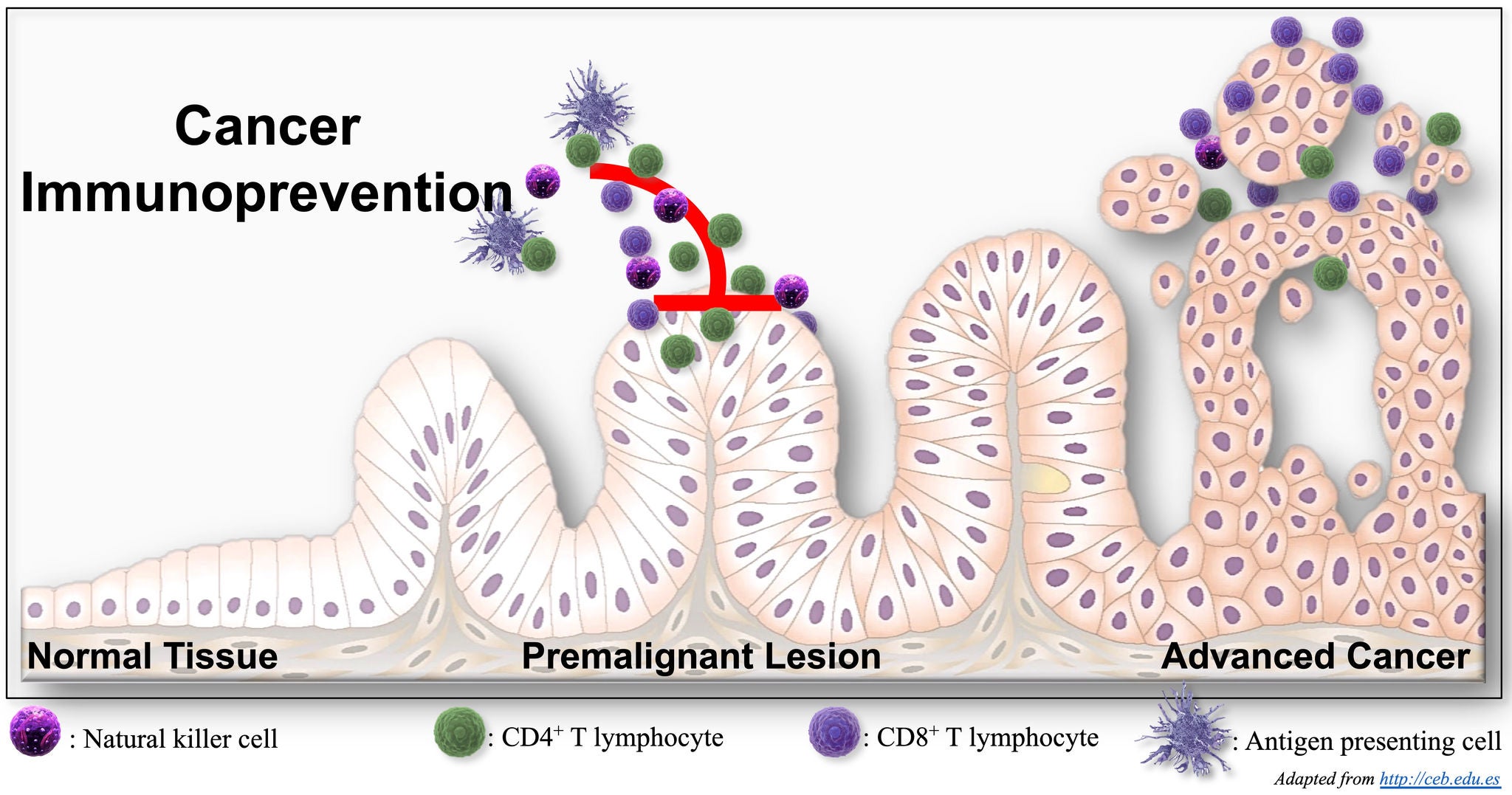
The Demehri laboratory explores the role of the immune system in regulating the early stages of cancer development in order to develop novel immunotherapies for cancer prevention and treatment. To date, cancer immunotherapies have proven effective against late-stage cancers; however, the role of the immune system in preventing the early development of cancer remains uncertain. The research in the Demehri laboratory is focused on identifying the immune mechanisms that drive an immune activation sufficient to prevent cancer formation from mutant cells within normal tissues and pre-cancerous lesions. This approach raises a great opportunity to discover novel immune pathways that can be leveraged in cancer prevention and therapy.
Research Projects
The field of cancer immunology has made substantial advances by deciphering the role of the tumor infiltrating CD8+ cytotoxic T lymphocytes (CTLs) in attacking cancer cells, which have led to promising cancer immunotherapeutics. The current immunotherapeutic approaches, however, are largely designed to boost the anti-tumor immune response that has already formed against late-stage metastatic cancers. Therefore, the current cancer immunotherapies like immune checkpoint blockade, which rely on a pre-existing CTL infiltrate in the tumor for their effects, are ineffective to treat cancers that frequently lack a significant anti-tumor immune infiltrate, especially during the early in-situ phases of their development. In order to expand the potential of cancer immunotherapy, the Demehri laboratory studies the pathways that lead to immune system activation against early phases of cancer development. Devising a mechanism to activate the immune system against cancer initiation and promotion has direct immunopreventive implications and can potentiate the immunity against late disease.
To pursue this goal, the Demehri laboratory studies the role of alarmins, commensal viruses, damage-associated molecular patterns (DAMPs)/stress signals, carcinogens, and aging associated immune factors in regulating early cancer development. The major areas of research in our laboratory are:
- Mechanisms of CD4+ T cell activation against cancer. Our laboratory has studied the mechanism of thymic stromal lymphopoietin (TSLP) in evoking tumor suppression. TSLP is an epithelial-derived cytokine that plays a central role in stimulating CD4+ T helper 2 (Th2)-mediated allergic diseases like atopic dermatitis and asthma. We have shown that high TSLP levels establish a dominant anti-tumorigenic immune environment preventing cancer promotion. Currently, our team investigates the detailed mechanism of Th2 cell anti-tumor function against solid cancers and examines its application for primary cancer prevention and the treatment of precancerous skin and breast lesions in patients.
- Mechanisms of natural killer (NK) cell recruitment and activation against cancer. NK cells are known for their potent anti-tumor properties. However, their role in controlling cancer development in vivo remains unclear. Our laboratory utilizes an NK cell-specific activating ligands to determine the combination of signals necessary to activate NK cells against early stages of carcinogenesis and to identify the mechanism of anti-tumor immunity mounted by the activated NK cells to block solid cancer promotion and progression.
- The impact of commensal viruses-immune system interplay on the homeostasis of the organs exposed to environmental insults. We aim to determine how the immune system’s control of commensal virome regulates the homeostasis of the virus-colonized tissues. Through this effort, we aim to realize the beneficial functions of commensal virome for the prevention and treatment of cancer and other chronic diseases that affect humans.
- Mechanisms of cancer promotion by the immune system. Although immune cells can mount anti-tumor immunity against cancer, they are also implicated in promoting cancer development in chronic inflammation. Our laboratory studies the initiating mechanisms of cancer-prone chronic inflammation development in the skin, pancreas, colon and liver, which are the major organs affected by chronic inflammation and its cancer sequela.
Full list of publications from the Demehri Lab
Demehri Lab Alumni
- Amir Ameri, M.D.
After the Demehri Lab: Internal Medicine Resident at the Johns Hopkins University - Mary Awad, M.D.
After the Demehri Lab: Dermatology Resident at University of Massachusetts School of Medicine - Marjan Azin, M.D.
After the Demehri Lab: Internal Medicine Resident at Saint Mary's Hospital - Margherita Boieri, Ph.D.
After the Demehri Lab: Scientist at Zelluna Immunotherapy, Norway - Jasmine Blandin
After the Demehri Lab: Medical student at Médecine Sorbonne Université, Paris, France - Mark Bunting, Ph.D.
After the Demehri Lab: Postdoctoral Fellow in the Genome Editing Laboratory at the University of Adelaide and South Australian Health and Medical Research Institute (SAHRMI), Australia - Joanna Cheng
After the Demehri Lab: Medical Student at Charité University, Germany - Scarlett (Se Yun) Cheon
After the Demehri Lab: Medical Student at Tulane University - Rikke Louise Christensen, M.Sc.
After the Demehri Lab: Graduate Student at the University of Copenhagen, Denmark - Trevor Cunningham
After the Demehri Lab: Senior Research Technologist at St. Jude Children's Research Hospital - Kaitlin Dempsey
After the Demehri Lab: Physician Assistant Student at Cornell University - Roy Feng, M.D.
After the Demehri Lab: Sr. Physician at BeiGene Co., China - Ranya Guennoun
After the Demehri Lab: MD-PhD Student at Washington University in St. Louis - Aeden Ghebreselassie, MSN, NP-C
After the Demehri Lab: Family Nurse Practitioner, Woodbridge, Virginia - Tatsuya Hasegawa, Ph.D.
After the Demehri Lab: Scientist at Shiseido Co., Japan - Jennet Hojanazarova
After the Demehri Lab: Immunology PhD student at Harvard University - Satoshi Horiba
After the Demehri Lab: Scientist at Shiseido Co., Japan - Mei Huang, Ph.D
After the Demehri Lab: Associate Research Fellow at University of Science and Technology, China - Renyue Ji
After the Demehri Lab: PhD student at University of Hong Kong, Hong Kong - Sanne Kroon
After the Demehri Lab: PhD student in ETH Zurich, Inst. of Molecular Health Sciences, Netherlands - Truelian Lee, M.D.
After the Demehri Lab: Combined Internal Medicine-Dermatology Resident, MedStar/Georgetown University - Kaiwen Li, M.D.
After the Demehri Lab: Associate Professor in the Department of Urology at Sun Yat-sen Memorial Hospital, China - Tiancheng Li, M.D.
After the Demehri Lab: Associate Professor and Associate Chief Physician in the Department of Otolaryngology at Peking University First Hospital, China - Elena Lopez
After the Demehri Lab: MD/MBA Student at Northwestern Feinberg School of Medicine (starting in 2022) - Jonathan Messerschmidt
After the Demehri Lab: MD-PhD Student at Duke University - Emanuela Marchese, Ph.D
After the Demehri Lab: Medical scientific liaison at Maven Pharma, Italy - Sara Moradi Tuchayi, M.D., M.P.H.
After the Demehri Lab: Postdoctoral Fellow at Wellman Center, MGH - Mahsa Mortaja, M.D.
After the Demehri Lab: Postdoctoral Fellow at CBRC, MGH - Kenneth Ngo
After the Demehri Lab: Lead Research Associate at Dana Farber Cancer Institute - Tomonori Oka, M.D., Ph.D
After the Demehri Lab: Clinical Research Director at Sanofi, Boston - Valeria Oliver-García
After the Demehri Lab: Medical student at Ponce Health Sciences University School of Medicine, Puerto Rico - Jongho Park, Ph.D.
After the Demehri Lab: Assistant Professor, Keimyung University, Korea - Domitille Peigney
After the Demehri Lab: Master’s student in Biology and Health, École Normale Supérieure Paris-Saclay, Université Paris-Saclay, France - Quan Pham
After the Demehri Lab: Immunology PhD student at the Rockefeller University - Marta Requesens Rueda
After the Demehri Lab: PhD student in Faculty of Medical Sciences, University of Groningen (RUG), Netherlands - Erik Schiferle
After the Demehri Lab: PhD Student at Boston University - Grace Seifu
After the Demehri Lab: Undergraduate Student at Harvard University - Sabrina Smith
After the Demehri Lab: Medical Student at the University of Central Florida - Kathryn Trerice
After the Demehri Lab: Undergraduate Student at Harvard University - Maulik Vyas, Ph.D.
After the Demehri Lab: Senior Scientist at Bristol Myers Squibb - Bo Wang, Ph.D.
After the Demehri Lab: Associate Research Fellow at Sun Yat-sen Memorial Hospital, Sun Yat-sen University, China - Charlene Wang
After the Demehri Lab: Medical student at Tsinghua University, China - Dongyao Wang, Ph.D.
After the Demehri Lab: Associate Professor, Deputy Director of the Department of Hematology at The First Affiliated Hospital of University of Science and Technology of China - Hannah Wenzel
After the Demehri Lab: Medical student at the Technical University of Munich, Germany - Hannah Wu
After the Demehri Lab: Medical student at the University of Arkansas for Medical Sciences - Anniek Zaalberg
After the Demehri Lab: PhD Student at Netherlands Cancer Institute, Netherlands - Anna Zemel, Ph.D.
After the Demehri Lab: Instructor at Ariel University, Israel - Eray Yihui Zhou, M.D.
After the Demehri Lab: Attending Dermatologist at Beijing Tsinghua Changgung Hospital, Tsinghua University, China - Can (Nora) Zhou
After the Demehri Lab: Graduate student at Zhejiang University, China
Selected list of publications
Andresen N.E., Son H.G., Joh J.J., Demehri S. Virome antigens as triggers for immune recognition of mutant clones in normal tissues. JCI Insight. 2026 May 5:e203484. doi: 10.1172/jci.insight.203484. PMID: 42084930
Huang M, Wang D, Huang J, Bae AN, Xia Y, Zhao X, Mortaja M, Azin M, Collier MR, Semenov YR, Park JH, Demehri S. Hepatitis B virus promotes liver cancer by modulating the immune response to environmental carcinogens. Nature Communications. 2025 Jun 27;16(1):5360. doi: 10.1038/s41467-025-60894-z. PMID: 40579434.
Oka T, Smith SS, Oliver-Garcia VS, Lee T, Son HG, Mortaja M, Azin M, Garza-Mayers AC, Huang JT, Nazarian RM, Horn TD, Demehri S.Epigenomic regulation of stemness contributes to the low immunogenicity of the most mutated human cancer.Cell Rep. 2025 May 27;44(5):115561. doi: 10.1016/j.celrep.2025.115561. PMID: 40250424.
Son HG, Ha DT, Xia Y, Li T, Blandin J, Oka T, Azin M, Conrad DN, Zhou C, Zeng Y, Hasegawa T, Strickley JD, Messerschmidt JL, Guennoun R, Erlich TH, Shoemaker GL, Johnson LH, Palmer KE, Fisher DE, Horn TD, Neel VA, Nazarian RM, Joh JJ, Demehri S. Commensal papillomavirus immunity preserves the homeostasis of highly mutated normal skin. Cancer Cell. 2025 Jan 13;43(1):36-48.e10. doi: 10.1016/j.ccell.2024.11.013. PMID: 39672169.
Oka T, Smith SS, Son HG, Lee T, Oliver-Garcia VS, Mortaja M, Trerice KE, Isakoff LS, Conrad DN, Azin M, Raval NS, Tabacchi M, Emdad L, Das SK, Fisher PB, Cornelius LA, Demehri S. T helper 2 cell-directed immunotherapy eliminates precancerous skin lesions. J Clin Invest. 2025 Jan 2;135(1). doi: 10.1172/JCI183274. PMID: 39744942.
Park, J.H., Mortaja, M., Son, H.G., Zhao, X., Sloat, L.M., Azin, M., Wang, J., Collier, M.R., Tummala, K.S., Mandinova, A., Bardeesy, N., Semenov, Y.R., Mino-Kenudson, M., Demehri, S., Statin prevents cancer development in chronic inflammation by blocking interleukin 33 expression. Nature Communications. 2024 May 30;15(1):4099. doi: 10.1038/s41467-024-48441-8. PMID: 38816352.
Huang, M., Xia, Y., Li, K., Shao, F., Feng, Z., Li, T., Azin, M., and Demehri, S., Carcinogen exposure enhances cancer immunogenicity by blocking the development of an immunosuppressive tumor microenvironment. J Clin Invest. 2023 Oct 16;133(20). PMID: 37843274.
Hasegawa, T., Oka, T., Son, H. G., Oliver-García, V. S., Azin, M., Eisenhaure, T. M., Lieb, D.J., Hacohen, N., Demehri, S., Cytotoxic CD4+ T cells eliminate senescent cells by targeting cytomegalovirus antigen. Cell. 2023 Mar 30;186(7):1417-1431.e20. PMID: 37001502.
Boieri, M., Malishkevich, A., Guennoun, R., Marchese, E., Kroon, S., Trerice, K. E., Awad, M., Park, J. H., Iyer, S., Kreuzer, J., Haas, W., Rivera, M. N., Demehri, S., CD4+ T helper 2 cells suppress breast cancer by inducing terminal differentiation. J Exp Med. 2022 Jul 4;219(7) PMID: 35657353.
Bunting, M.D., Vyas, M., Requesens, M., Langenbucher, A., Schiferle, E. B., Manguso, R. T., Lawrence, M. S., Demehri, S., Extracellular matrix proteins regulate NK cell function in peripheral tissues. Science Advances. 2022 Mar 18;8(11):eabk3327. PMCID: PMC8926340.
Schiferle, E. B., Cheon, S. Y., Ham, S., Son, H. G., Messerschmidt, J. L., Lawrence, D. P., Cohen, J. V., Flaherty, K. T., Moon, J. J., Lian, C. G., Sullivan, R. J., Demehri, S., Rejection of benign melanocytic nevi by nevus-resident CD4(+) T cells. Science Advances 7, (2021).
Li, K., Li, T., Feng, Z., Huang, M., Wei, L., Yan, Z., Long, M., Hu, Q., Wang, J., Liu, S., Sgroi, D. C., Demehri, S., CD8(+) T cell immunity blocks the metastasis of carcinogen-exposed breast cancer. Science Advances 7, (2021).
Park, J. H., Ameri, A. H., Dempsey, K. E., Conrad, D. N., Kem, M., Mino-Kenudson, M., Demehri, S., Nuclear IL-33/SMAD signaling axis promotes cancer development in chronic inflammation. EMBO J 40, (2021).
Strickley JD, Messerschmidt JL, Awad ME, Li T, Hasegawa T, Ha DT, Nabeta HW, Bevins PA, Ngo KH, Asgari MM, Nazarian RM, Neel VA, Jenson AB, Joh J, and Demehri S. Immunity to commensal papillomaviruses protects against skin cancer. Nature. 2019 Nov;575(7783):519-522. PMID: 31666702.
Cunningham, T.J., Tabacchi, M., Eliane, J.P., Tuchayi, S.M., Manivasagam, S., Mirzaalian, H., Turkoz, A., Kopan, R., Schaffer, A., Saavedra, A.P., Wallendorf, M., Cornelius, L.A., and Demehri, S. Randomized trial of calcipotriol combined with 5-fluorouracil for skin cancer precursor immunotherapy. J Clin Invest 2017; 127(1): 106-116.
Open Positions
Postdoctoral Research Fellow position is available for a highly motivated individual with expertise in immunology, cancer biology and genomics. Expertise in biochemical, immunological and mice experimentations are required for this position.
Interested candidates should send their information including CV and the name of 2-3 references to Dr. Shawn Demehri: sdemehri1@mgh.harvard.edu