Laboratory of Jaehong Suh, PhD
Email: suh.jaehong@mgh.harvard.edu
Call: 617-643-6899
Overview
In the Suh Lab, we study the genetic and molecular mechanism of Alzheimer’s disease (AD) and spinocerebellar ataxia (SCA). We have two main projects in the lab. The first is to study the effects of ADAM10-mediated cleavage of APP on brain physiology and AD pathogenesis. This project is based on our novel AD hypothesis that goes beyond ADAM10’s well-known function of preventing amyloid beta (Abeta) generation. We aim to develop new therapeutics that would increase ADAM10 expression selectively in the brain. The second project is to explore the impact of BACE1 inhibition on the pathogenesis of SCA. SCA is a dominantly inherited neurodegenerative disease that impairs motor coordination and balance, leading to slurred speech, swallowing difficulty, and early lethality. BACE1 is best known for its critical role in Abeta generation, while recent accumulating evidence supports its function in motor coordination. We test if BACE1 inhibitor can ameliorate SCA symptoms and be developed as a therapeutic for the disease. For these research projects, we generate and/or employ genetically modified mouse models relevant to the neurodegenerative diseases. The third project in development is to identify genetic components of highly superior autobiographical memory (HSAM), a neuropsychiatric trait recently identified in about 100 individuals worldwide. Those individuals who have HSAM can recall in detail what happened on a specific day years/decades ago as if it had happened yesterday.
Research Projects
- Investigating the role of ADAM10-mediated cleavage of APP in AD etiology and pathogenesis.
- Testing BACE1 inhibition as a therapeutic target of spinocerebellar ataxia.
- Identifying genetic determinants of highly superior autobiographical memory (HSAM).
Research team
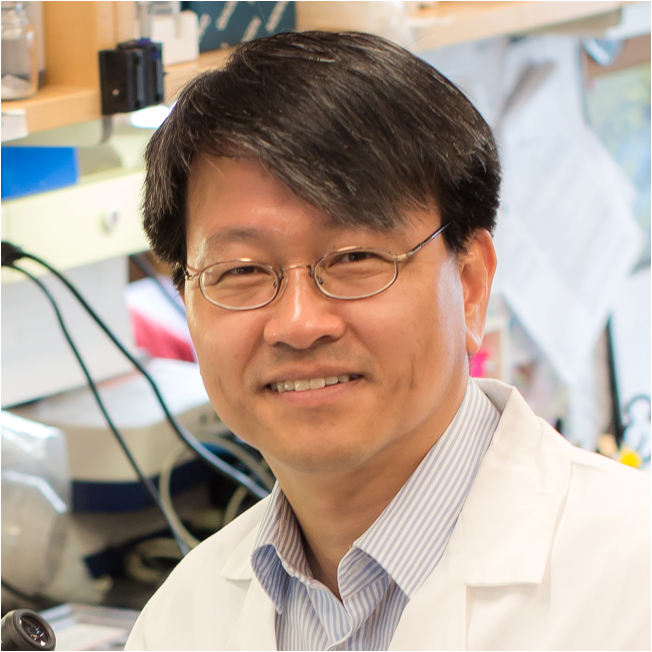
Jaehong Suh, PhD
Assistant Professor of Neurology
Dr. Jaehong Suh joined the Genetics and Aging Research Unit at Massachusetts General Hospital in 2006 as a postdoctoral Research Fellow. He first studied the role of FE65 and FE65L1 in APP metabolism in neuronal system and cataract formation in the eyes. He then investigated the pathogenic mechanisms of ADAM10 missense mutations identified from several AD families (2013). In 2019, Dr. Suh demonstrated the role of ataxin-1 loss of function on BACE1 expression and AD pathogenesis.
Dr. Suh was promoted to Instructor in 2010 and Assistant Professor of Neurology in 2014. He established his own lab and continued the research to elucidate the underlying mechanisms of AD and SCA and to identify viable therapeutic targets. Prior to joining Mass General, Dr. Suh studied neuronal death mechanism and tau splicing changes in ischemic brain as a postdoctoral fellow at Ajou University School of Medicine in South Korea.
Dr. Suh received his B.S., M.S., and Ph.D. degrees in Biological Sciences from Korea Advanced Institute of Science and Technology (KAIST). For his PhD thesis, he studied cellular and molecular mechanisms of dioxin-induced adverse effects on immune functions. Dr. Suh’s research at MGH has been supported through grants from the NIH, Cure Alzheimer’s Fund, MassCATS, Korea Dementia Research Center, and BrightFocus Foundation.
Publications
Selected Publications
- Suh J, Choi SH, Romano DM, Gannon MA, Kim DY, Tanzi RE (2013). ADAM10 Missense Mutations Potentiate β-Amyloid Accumulation by Impairing Prodomain Chaperone Function. Neuron, 80, 385-401. PMCID: PMC4105199.
- Suh J*, Moncaster JA, Wang L, Hafeez I, Herz J, Tanzi RE, Goldstein LE, Guénette SY* (2015). FE65 and FE65L1 amyloid precursor protein-binding protein compound null mice display adult-onset cataract and muscle weakness. FASEB J, 29, 2628-39. PMCID: PMC4447227. *Corresponding authors.
- Suh J*,#, Romano DM, Nitschke L, Herrick SP, Dimarzio BA, Dzhala V, Bae JS, Oram MK, Zheng Y, Hooli B, Mullin K, Gennarino VA, Wasco W, Schmahmann JD, Albers MW, Zoghbi HY*, Tanzi RE* (2019). Loss of Ataxin-1 Potentiates Alzheimer's Pathogenesis by Elevating Cerebral BACE1 Transcription. Cell, 178, 1159-1175. PMCID: PMC6726125. *Corresponding authors. #Lead contact.
- Dzhala V*, Fowler AJ, DiMarzio BA, Staley KJ, Suh J*,# (2022) Analysis of brain region-specific mRNA synthesis and stability by utilizing adult mouse brain slice culture. STAR Protoc. 3, 101349. PMCID: PMC9059153.
- Fowler AJ, Tanzi RE, Suh J (2023). Modulation of BACE1 as a Therapy for Spinocerebellar Ataxia. Patent Cooperation Treaty (PCT). International filing date: May 25, 2023. Publication date: November 30, 2023. Publication number: WO 2023/230282.