Spaulding-Harvard Traumatic Brain Injury Model System
Email: shtbims@massgeneralbrigham.org
Overview
Recovery after traumatic brain injury does not follow a predictable timeline, and critical decisions are often made with limited long-term data.
The Traumatic Brain Injury Model System is designed to address this gap by following patients across the full course of recovery, from injury through long-term outcomes. The Spaulding-Harvard Traumatic Brain Injury Model System (SH-TBIMS) applies this model within a coordinated system that brings together Level 1 trauma care at Massachusetts General Hospital and Brigham and Women's Hospital, inpatient rehabilitation at Spaulding Rehabilitation Hospital, and long-term acute care at Spaulding Hospital Cambridge.
SH-TBIMS is one of 16 centers nationwide funded by the National Institute on Disability, Independent Living, and Rehabilitation Research (NIDILRR) to advance traumatic brain injury research.
The Traumatic Brain Injury Model System is built to track recovery over time, linking clinical care with long-term outcomes data. What distinguishes SH-TBIMS is the ability to do this within a single, coordinated care pathway spanning acute care, rehabilitation, and long-term recovery across the Mass General Brigham system.
What is a Model System?
Model Systems are networks of hospitals across the United States that focus on tracking and improving recovery of people with traumatic brain injury, burn injury, or spinal cord injury. These federally funded centers conduct research, educate patients and families, and uphold excellence in clinical care. Spaulding Rehabilitation Hospital is the only hospital in the nation selected to hold all three Model System specialties for two consecutive 5-year funding cycles, and Spaulding continues to be the only institution nationally to have all three Model System specialties at the same time.
Clinical and research strengths
Spaulding has worked to improve care for people with severe acquired brain injury, including through the development of a highly specialized Disorders of Consciousness Program, one of only a few in the United States tailored to this patient population. SH-TBIMS also contributes to the TBIMS National Database, which now includes data from more than 20,000 people collected over more than 30 years. Together, this clinical and research infrastructure helps advance knowledge about recovery, outcomes, and long-term care after traumatic brain injury.
Research Projects
SH-TBIMS research focuses on how recovery is defined, measured, and experienced over time, particularly for individuals with severe traumatic brain injury.
Open Studies currently highlighted on the website include:
TBI Model Systems National Database: Eligible patients entering the Brain Injury Program at Spaulding Rehabilitation Hospital Boston and Spaulding Hospital Cambridge may anonymously contribute data to the national database. The repository includes pre-injury medical history, details of the hospital course, questionnaire data, bedside testing, and lifelong follow-up interviews conducted every few years.
Whose Outcome is it Anyway? A Person-Centered Approach to Conceptualizing Outcome After Severe TBI. The goal of rehabilitation for persons with traumatic brain injury (TBI) is to attain a “favorable” outcome. However, persons with TBI and their caregivers have never had a voice in defining outcome. We will identify and compare the notion of “acceptable” outcome after severe TBI (sTBI) from the perspective of diverse TBI stakeholder groups, and then develop a Conversation Guidebook that can be used by caregivers of persons with sTBI to prepare for discussions with providers about prognosis, goals of care and desired outcomes.
Engaging Caregivers in Outcome Assessment Across the Lifespan. This module project will develop, calibrate and evaluate short forms of the “Post-Acute Survey on Severe Disability after TBI (PASSD-TBI)” Interview, an outcome assessment tool we previously developed with other TBIMS centers. PASSD-TBI short forms will provide new knowledge about the chronic phase of recovery from sTBI, improve understanding of factors that impact caregiver effectiveness and reduce respondent burden.
Past projects
Development, validation and feasibility of the Coma Recovery Scale-Revised for Accelerated Standardized Testing (CRSR-FAST): This site-specific project addresses the high rate of diagnostic error in disorders of consciousness and tests an abbreviated version of the Coma Recovery Scale-Revised for intensive care use. The goal is to provide clinicians with a brief, standardized measure that supports accurate diagnosis and longitudinal assessment across the continuum of recovery.
Partnering with Caregivers to Increase Knowledge of the Post-Acute Phase of Recovery from Severe TBI: Development and validation of the Post-Acute Survey on Severe Disability after TBI (PASSD-TBI): SH-TBIMS leads this multi-center study with the Indiana TBIMS, TIRR TBIMS, Tampa VA Polytrauma Rehabilitation Center, and Richmond VA Polytrauma Rehabilitation Center. The study is developing and testing a structured caregiver interview to obtain long-term outcome data on persons with prolonged disorders of consciousness and better understand caregiving burden and influences on caregiving activities.
Looking for Consciousness: A Novel Functional Neuroimaging Approach for Detection of Visual Cognition in Patients with Severe TBI and Disorders of Consciousness. This project focused on using advanced fMRI to detect command following and communication in patients who may retain conscious awareness but appear unconscious on routine clinical examination.
MEDIA
April 9, 2026
Hidden Consciousness After Severe Brain Injury Dr. Joseph Giacino, Dr. Yelena Bodien, and Dr. Brian Edlow were featured in a New York Times Magazine cover story exploring the growing evidence that some patients who appear entirely unresponsive after severe brain injury may retain hidden consciousness, challenging conventional assumptions about awareness and recovery. Read on The New York Times
Recovering from Disorders of Consciousness
Produced by the Model Systems Knowledge Translation Center, this video series offers an accessible look at disorders of consciousness after severe traumatic brain injury. In addition to a short documentary featuring clinicians from the Spaulding–Harvard Traumatic Brain Injury Model System and the recovery journeys of two young patients, the series includes 19 short videos on causes, recovery, care, and life during and after emergence from disorders of consciousness. Together, these resources highlight the importance of time, careful assessment, and access to specialized rehabilitation in supporting meaningful recovery. Watch on MSKTC
December 11 2025: Consciousness
In the inaugural installment of The Harvard Gazette’s One Word Answer series, Spaulding’s Dr. Joseph Giacino shares insights from his work at the intersection of clinical care and disorders of consciousness research. The piece highlights the complexity of understanding consciousness and assessing patients with disorders of consciousness. Read on The Harvard Gazette
May 19, 2025: Massachusetts Permanent Commission on the Status of Persons with Disabilities Hosts Hearing on Advancing Health Equity
The Massachusetts Permanent Commission on the Status of Persons with Disabilities hosted a hybrid informational hearing at the Massachusetts State House focused on advancing health equity for people with disabilities. The hearing reflects broader public conversations about access, equity, and disability-informed systems of care. View on Mass.gov
May 9, 2016: Life or Death Decisions: The Brain’s “Self-Repair” Process May Go On for Years. Watch on NBC News
Neuropsychologist Dr. Joe Giacino says that after a traumatic brain injury, the brain’s ability to repair itself may go on for a longer period of time than originally thought. Watch on NBC News
July 6, 2011: Rediscovering Consciousness in People Diagnosed as “Vegetative”.
Often people with bad brain injuries seem unresponsive, but many still have thoughts, feelings, and memories flickering in and out of consciousness. Can neuroscience rescue these lost brains? This Discover Magazine cover story, later recognized as one of the publication’s top stories of the year, explores how people who appear entirely unresponsive may still show signs of consciousness. Read on Discover Magazine
June 11, 2015: How One Brain Came Back from Unconsciousness.
Despite its encircling fortress of bone, the human brain is especially vulnerable to physical insult. There are approximately 1.7 million traumatic brain injuries in the United States each year, and although most of them are mild or moderate, thousands result in severe brain damage. Those injuries always happen on the same day: day zero, a day that marks the start of a fateful and often flawed prognostic calendar. Read on NY Magazine
August 14, 2013: New Measure of Consciousness Track Our Waking States.
This fairly simple metric for neural activity could guide treatment for people with brain injuries. Read on Scientific American
February 29, 2012: Parkinson’s Drug May Help with Brain Injuries, Report Finds.
Daily doses of a drug used to treat Parkinson’s disease significantly improved function in severely brain-injured people thought to be beyond the reach of treatment, scientists reported on Wednesday, providing the first rigorous evidence to date that any therapy reliably helps such patients. Read on NY Times
February 29, 2012: Amantadine Speeds Recovery From Severe Traumatic Brain Injury.
A drug used to treat the symptoms of Parkinson’s disease also speeds recovery from severe traumatic brain injuries, a new study has found. Read on ABC News
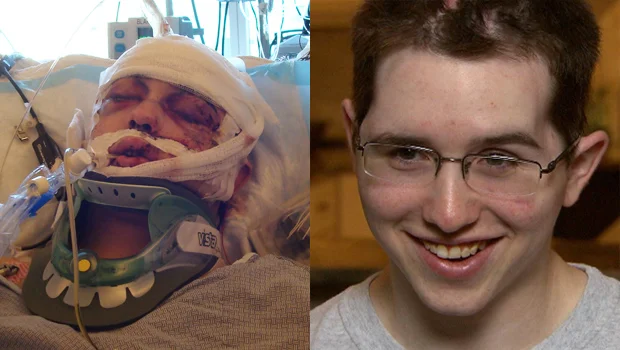
Just Keep Going: One Family’s Long Road to Recovery
Publications
To explore publications related to the Spaulding-Harvard Traumatic Brain Injury Model System, please visit the National Rehabilitation Information (NARIC) Library. For additional publications from Dr. Giacino and the broader Neurorehabilitation Laboratory, please visit our lab website Home – Spaulding Rehabilitation Hospital Neurorehabilitation Laboratory