Center for Immunology & Inflammatory Diseases
Email: EMCGRATH1@mgh.harvard.edu
Email: ALITMAN@mgh.harvard.edu
Overview
Our research focuses on understanding the immune system and the inflammatory process—and how these contribute to the origin and development of a wide range of diseases.
Basic Science Aimed at Enhancing Patient Care
The process of chronic inflammation characterizes classic autoimmune diseases, including rheumatoid arthritis and lupus as well as asthma and other allergic and immunologic disorders. Recent evidence also suggests the immune system influences the development of common conditions, such as cancer, heart disease, obesity, diabetes and Alzheimer's disease.
At the CIID, we study how immune system and the inflammatory process contribute to the origin and development of a wide range of diseases. We work closely with many of Mass General's clinical and research units to integrate basic science, clinical research and clinical care related to immunology-mediated diseases.
Since 2000 we have helped to clarify the mechanisms underlying diseases, such as arthritis, asthma, Alzheimer's disease, pulmonary fibrosis and cancer. Our division's shared goal is to deliver new therapies and treatments that ultimately improve care for patients with these and other conditions.
Interdisciplinary & Multi-institutional
The CIID is a true interdisciplinary and multi-institutional effort. We are building bridges across disciplines at Mass General Brigham—such as allergy, rheumatology, pulmonary, infectious disease and cardiology—to assess problems from different expert perspectives and generate innovative ideas.
Our studies are further enriched by collaborations with investigators from the Broad Institute of MIT and Harvard, the Ragon Institute of Mass General Brigham, MIT, and Harvard and the Mass General Brigham Cancer Center.
Nineteen principal investigators, all of whom are affiliated with Mass General and Harvard Medical School, operate research laboratories at the CIID. Learn more about their research labs.
Research Labs
El Khoury Lab
Knipe Lab
Patil Lab
Perugino Lab
Reynolds Lab
Steere Lab
Research Platforms
Overview
The CIID Single Cell Genomics and Spatial Transcriptomics Research Platform leverages single-cell ‘multi-omics’ to unravel new insights into the immune system. Single-cell RNA sequencing (scRNAseq), Single Cell Spatial Transcriptomics and ‘multi-omics’ analysis provide an unbiased, data-driven way of systematically detecting immune cells and their interactions with other cells in tissue.
Facilities & Equipment
The CIID Single Cell Genomics and Spatial Transcriptomics Research Platform occupies 530 square feet of laboratory space and is equipped with state-of-the-art 10 X genomics equipment necessary to perform single cell genomics and Spatial transcriptomics techniques and analyses, including in-house sequencing capabilities and bioinformatics .
Services
The CIID Single Cell Genomics and Spatial Transcriptomics Research Platform collaborates extensively with members of the CIID and other investigators in the Mass General research community
Getting Started
Contact Dr. Villani at AVILLANI@mgh.harvard.edu, the Director of this platform, to discuss a collaboration.
The CIID Intravital Microscopy Laboratory at MGH is dedicated to the dynamic visualization of cellular processes in vivo in small animals using multiphoton excitation fluorescence microscopy.
Overview
The primary focus of the CIID Intravital Microscopy Laboratory is on the study of immunological processes, such as immune cell migration and cell-cell interactions in lymphoid organs and peripheral tissues, in mouse experimental models.
Facilities & Equipment
The CIID Intravital Microscopy Lab is situated on the 6th floor of Building 149 in the Charlestown Navy Yard. It consists of a microsurgical facility and an adjacent dedicated multiphoton microscopy room.
The multiphoton microscopy system consists of two Spectra-Physics MaiTai HP femtosecond pulsed infrared lasers and a Prairie Technologies Ultima IV upright laser scanning microscope equipped with a 4-channel detection system.
Services
The CIID Intravital Microscopy Lab welcomes opportunities for productive collaborations with members of the Mass General research community.
Getting Started
Contact Dr. Mempel at TMempel@mgh.harvard.edu or 617-724-4596 to gain access to this resource lab.
Overview
The Tetramer Core Laboratory at Massachusetts General Hospital generates fluorescently labeled peptide-MHC multimers for the purpose of detecting polyclonal populations of antigen-specific T cells.
The understanding of adaptive immunity requires the study of T cells, which mediate cellular immune responses against protein-derived antigens. T cells express antigen receptors (TCR) that bind complexes of peptide and MHC molecules (pMHC) displayed on the surface of antigen-presenting cells. To study a T cell response to a specific antigen, one must identify T cells expressing TCRs that can bind to the pMHC derived from that antigen.
Many elaborate experimental systems have been developed to identify such antigen-specific T cells, but the most direct, and perhaps powerful approach involves the detection of these cells using a soluble reagent comprised of the pMHC ligand itself. With such a reagent, one can stain for all the T cells within a population that are specific for a given pMHC epitope. This allows for the comprehensive study of polyclonal T cell responses arising from an endogenous T cell repertoire rather than the more traditional approach of tracking a monoclonal response from a transferred population of TCR transgenic cells. These types of studies will be essential in the future as the field of immunology demands more physiological experimental systems.
The binding affinity between a TCR and cognate pMHC complex is very low, which makes the use of a monomeric soluble pMHC complex inadequate. However, multimerization of pMHC molecules creates a soluble protein that can interact with multiple TCRs on the surface of a T cell, resulting in a significant increase in overall avidity that allows for stable binding to the cell. While fluorescently labeled pMHC tetramers have been in use for several years, there have been many technical problems related to their construction, particularly with pMHCII, that have prevented their widespread use.
The Tetramer Core Laboratory at Massachusetts General Hospital has incorporated several technical refinements into the design and production of pMHC tetramers to generate high quality reagents suitable for use in the tracking of antigen-specific T cells, which would be applicable to almost any study involving the immune system.
Facilities & Equipment
The Tetramer Core Laboratory at Massachusetts General Hospital has the necessary infrastructure to design, clone, express and purify recombinant pMHCI and pMHCII molecules and to incorporate them into fluorescently labeled multimeric complexes (tetramers).
Services
The Tetramer Core Lab will initially generate PE- and APC-labeled tetramers for some commonly used mouse I-A and human DR MHC class II-restricted peptide antigens. Custom tetramer orders for specifically requested antigens and/or MHC molecules will be considered, with first priority going to investigators within the CIID.
Fee Schedule
The generation of high quality pMHC tetramers requires numerous resources in the form of supplies, reagents and labor. A fee schedule to compensate these expenses will be determined for both stock and custom order tetramers.
Getting Started
Contact Dr. Moon at JJMOON@MGH.HARVARD.EDU to discuss a collaboration.
Training tomorrow's leaders
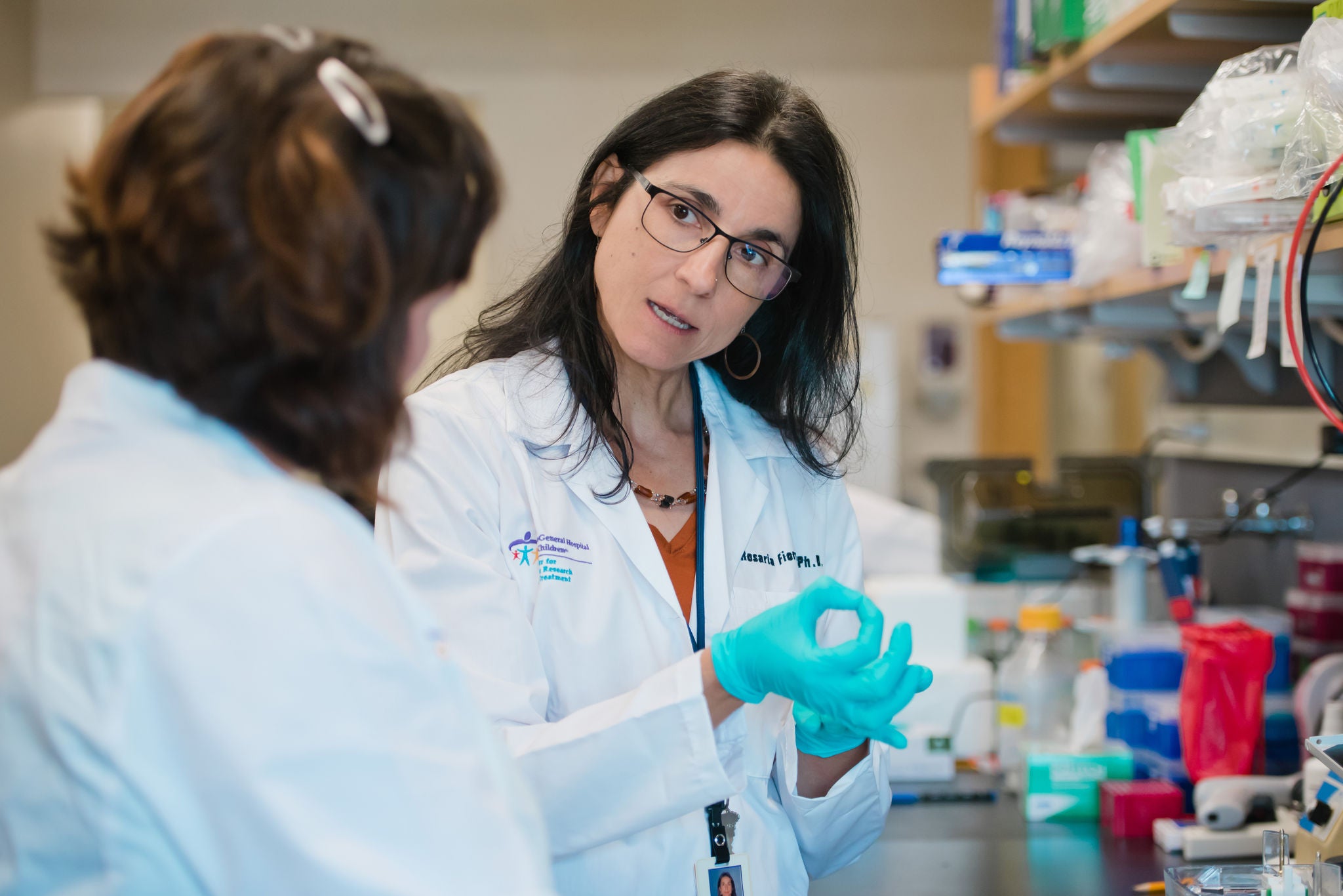
Explore training opportunities
Contact CIID Research Inquiries Only
Charlestown Navy Yard
149 13th Street mailstop:149-8312
Charlestown, MA 02129